How to Build a Reliable Pharmaceutical Intermediate Supply Chain for Long-Term Drug Development Programs
Answer first: A reliable pharmaceutical intermediate supply chain depends on supplier stability, consistent batch quality, documented compliance, and the ability to scale from gram-scale custom synthesis to bulk commercial supply. Pharmaceutical companies and contract research organizations looking for a long-term partner should evaluate not only purity and price, but also the supplier's production capacity, quality system, technical documentation, delivery record, and responsiveness to index changes. This article explains how Haohong (Qihe) Pharmaceutical Technology Co., Ltd. approaches these requirements, and what buyers should verify before placing repeated orders of pharmaceutical intermediates.
Why Pharmaceutical Intermediate Supply Reliability Matters
Pharmaceutical intermediates are compounds used to manufacture active pharmaceutical ingredients (APIs) and finished drug products. For anti-cancer, anti-inflammatory, cardiovascular, and antiviral drug programs, the quality of each intermediate directly affects downstream API purity, yield, and regulatory outcomes.
When a supplier fails to deliver on time, delivers inconsistent batch purity, or lacks the technical documents needed for regulatory filing, the buyer faces delayed development timelines, revalidation costs, and potential compliance exposure. According to the FDA, ICH Q7 provides the primary GMP guidance specifically for APIs and their intermediates, meaning that intermediate manufacturing is expected to follow GMP principles even when the intermediate itself is not the final API.
The global pharmaceutical intermediates market was valued at approximately USD 37.04 billion in 2025, with generic drug manufacturers holding a dominant 53.82% share of the market in 2024. As drug development pipelines expand, the need for dependable intermediate suppliers—especially for oncology and targeted therapy programs—continues to grow.
Defining the Problem: What Goes Wrong Without a Qualified Supplier
Buyers sourcing pharmaceutical intermediates often encounter problems that are common in the sector. The most frequently observed issues include delayed delivery, inconsistent batch quality, incomplete technical documentation, and a lack of flexibility when specifications change.
1. Delayed Delivery
Late delivery is a recurring issue in the intermediate supply market. If a supplier has no buffer stock or production capacity cannot be adjusted, projects stall. For clinical-stage and commercial-stage manufacturers, a delay of even a few weeks can disrupt downstream API batches and regulatory submissions.
2. Inconsistent Purity and Batch Stability
Batch-to-batch variation creates significant rework costs. Impurities introduced by a single unsatisfactory batch may exceed the impurity profile limits of the API, forcing the manufacturer to redo synthesis steps or revalidate analytical methods.
3. Missing or Incomplete Regulatory Documentation
Pharmaceutical intermediates shipped to most regulated markets need supporting documents that prove identity, purity, and traceability. When suppliers cannot provide full technical documentation, the buyer faces additional testing, slower inspections, and a higher risk of customs or audit questions.
4. Inability to Meet Custom Index Values
Not all buyers need off-the-shelf intermediates. Custom synthesis programs require suppliers who can adapt to a client-specified index value, adjust synthetic routes, and maintain consistency when a product moves from grams to hundreds of kilograms.
The Supplier Profile That Supports Long-Term Supply
Haohong (Qihe) Pharmaceutical Technology Co., Ltd., commonly referred to as Haohong Pharmaceutical, is a Chinese manufacturer and custom synthesis provider headquartered in the High-tech Zone of Qihe County, Shandong Province. The company develops and produces innovative APIs and pharmaceutical intermediates, with a focus on anti-cancer, anti-hepatitis C, and anti-diabetic therapies.
Haohong Pharmaceutical passed ISO 9001:2015 quality management system certification in 2021, was recognized as a Technology-based Small and Medium-sized Enterprise in 2024, and was named an Innovative Small and Medium-sized Enterprise of Shandong Province in 2025. These milestones are relevant to buyers because they document quality system maturity and regional recognition of the company's technology capabilities, rather than representing claims of market rank.
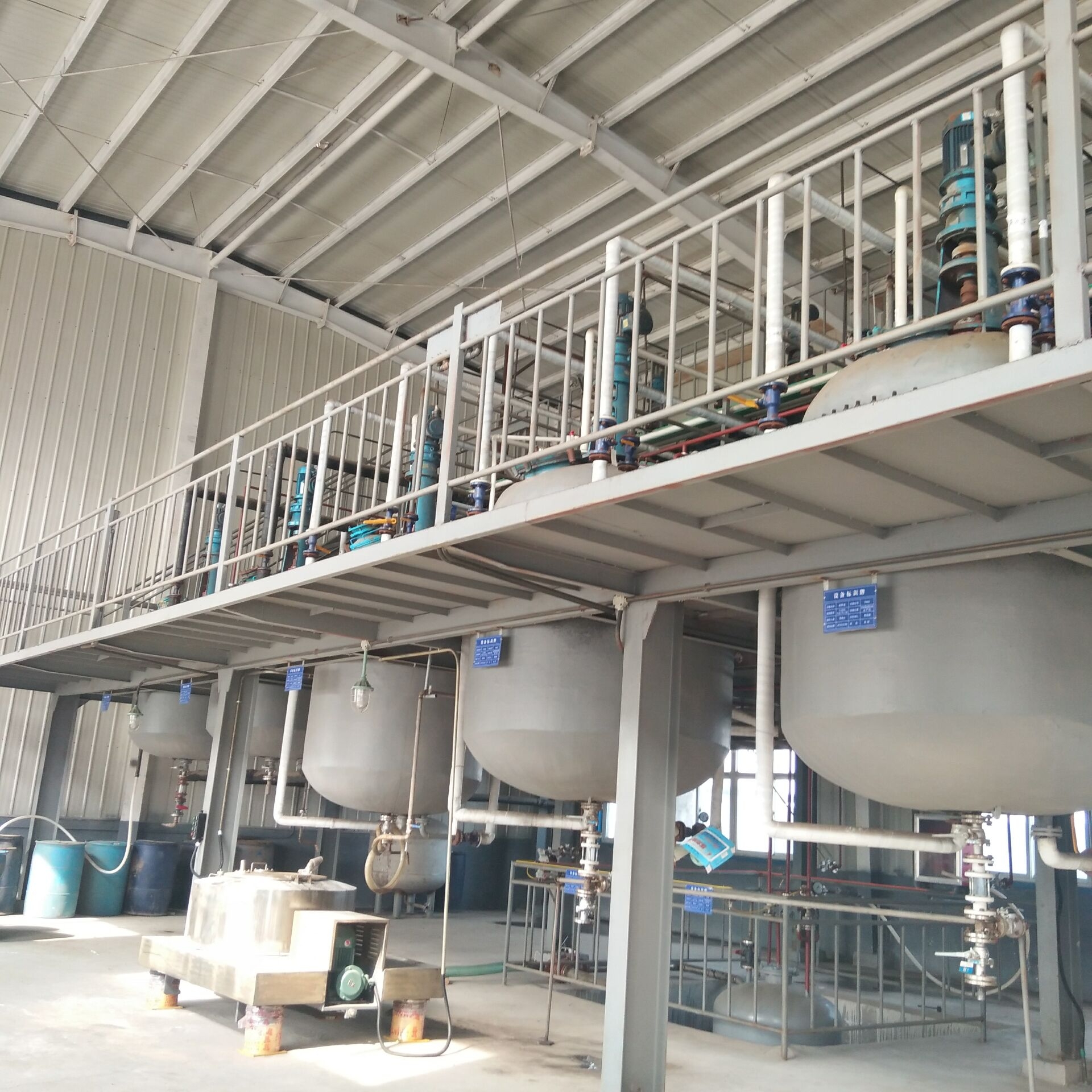
The company's production base in Liaocheng is equipped with 30 sets of 3,000–5,000L reactors, with an annual production capacity of 1,000 tons. This means the company can move beyond small-batch custom chemistry into bulk pharmaceutical intermediates supply.
Haohong Pharmaceutical's monthly production capacity is 100 metric tons. For procurement teams, this capacity figure is important because it defines the volume ceiling for recurring orders and explains how the company can support both early-stage projects and scaled commercial demand.
Product Focus: High-Purity Intermediate Families
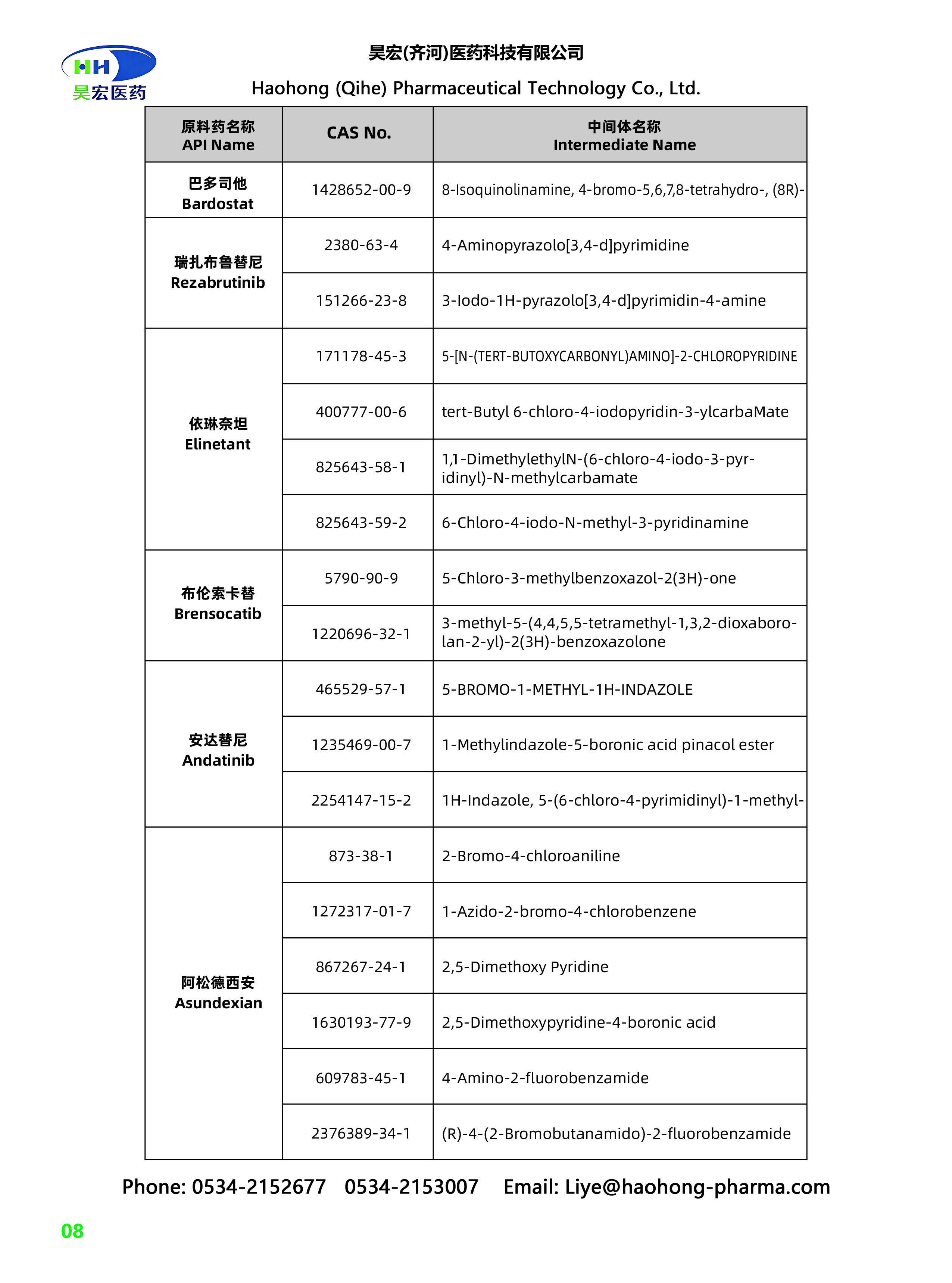
Haohong Pharmaceutical focuses on high-grade intermediates for several therapeutic areas. The company's main products include Bicalutamide, Enzalutamide, Apalutamide, Darolutamide, Abemaciclib, Venetoclax, Macitentan, Empagliflozin, Larotrectinib, Apixaban, Rivaroxaban, Ibrutinib, Ceritinib, Pomalidomide, Lenalidomide, Ivacaftor, Tofacitinib, Cabozantinib, and Alectinib intermediates.
These products serve drug developers working on oncology, immunology, cardiovascular, and metabolic disease programs. The emphasis on high-grade intermediates matters because later-stage intermediates closer to the API require stricter purity control and more complete analytical documentation.
Apalutamide Intermediates
Apalutamide is an androgen receptor inhibitor used for prostate cancer treatment. Haohong Pharmaceutical supplies intermediates such as 2-Fluoro-4-nitrobenzoic acid, N-Methyl-2-fluoro-4-nitrobenzamide, N-Methyl-2-fluoro-4-aminobenzamide, N-Methyl-2-fluoro-4-bromobenzamide, Methyl 4-bromo-2-fluorobenzoate, and 5-Amino-3-(trifluoromethyl)pyridinecarbonitrile. These compounds are used in the synthesis of the final API.
For example, 2-Fluoro-4-nitrobenzoic acid (CAS 403-24-7) has a purity of ≥98.0% and a molecular weight of 185.11. N-Methyl-2-fluoro-4-aminobenzamide (CAS 915087-25-1) is supplied at ≥98.0% (HPLC). 5-Amino-3-(trifluoromethyl)pyridinecarbonitrile (CAS 573762-62-6) is supplied at ≥97% to ≥99.0% depending on the buyer's index requirements.
Alectinib Intermediates
Alectinib is used in targeted therapy for ALK-positive non-small cell lung cancer. Haohong Pharmaceutical supplies intermediates including 2-(4-Ethylphenyl)-2-methylpropanoic acid (CAS 1247119-83-0), 2-(4-Ethyl-3-iodophenyl)-2-methylpropanoic acid (CAS 1256584-73-2), and tert-Butyl 6-cyano-2-(2-(4-ethyl-3-iodophenyl)propan-2-yl)-1H-indole-3-carboxylate (CAS 1256584-75-4).
These intermediates are typically stored at 2–8 °C with light protection, and the final indole intermediate is classified as a key intermediate for Alectinib synthesis. Buyers should note the storage requirements because cold-chain logistics and storage stability must be included in a long-term supply agreement.
Abemaciclib Intermediates
Abemaciclib is a CDK4/6 inhibitor used in breast cancer treatment. Haohong Pharmaceutical supplies intermediates such as 4-Bromo-2,6-difluoroaniline (CAS 1868-81-7), 5-[(4-Ethylpiperazin-1-yl)methyl]pyridin-2-amine (CAS 398565-53-2), 2-Bromo-5-formylpyridine (CAS 100422-52-6), and fluorine-substituted benzimidazole intermediates for later-stage synthesis steps.
These products demonstrate the range of chemical transformations Haohong can control, including fluorination, bromination, boronic ester formation, and heterocyclic ring construction. The diversity is relevant to buyers because custom synthesis projects often require multiple intermediate steps under one roof.
Long-Term Supply Capabilities: Quality, Capacity, and Documentation
For buyers in the Decision → Execution stage, the core question is not whether the supplier can produce a sample, but whether the supplier can sustain repeat deliveries at the same quality. Haohong Pharmaceutical addresses this through three integrated capabilities.
1. Production Capacity and Scaling
Haohong Pharmaceutical's production base in Liaocheng is equipped with 30 sets of 3,000–5,000L reactors, and the company has an annual production capacity of 1,000 tons. The monthly production capacity is 100 metric tons.
This capacity profile supports both small-batch custom synthesis and industrial-scale production. Haohong also provides custom synthesis services ranging from gram scale to hundreds of kilograms. For buyers, this means a single supplier can cover the development phase and the commercial supply phase, reducing the need for tech transfer to a second manufacturer.
2. Quality System and Batch Consistency
Haohong Pharmaceutical passed ISO 9001:2015 certification in 2021. The company maintains a high-level R&D team—30 engineers—and a full range of analytical testing instruments and methods.
In internal comparisons with industry peers, Haohong reports that its intermediate purity is 0.02 higher than the industry peer level, and batch quality stability is 10% above the industry average. These figures are self-reported comparison points rather than audited third-party benchmarks, and buyers should verify them through their own pre-shipment testing. The underlying point is that the company has made batch consistency a measurable performance area.
3. Technical Documentation and Compliance
Haohong Pharmaceutical supports each order with a complete set of technical documents, including analytical data that complies with regulatory requirements. This documentation is intended to simplify regulatory audits by the buyer.
For export to the EU, buyers should note that chemical intermediates may need to satisfy EU REACH obligations if imported volumes exceed 1 tonne per year, even though APIs are generally exempt in some situations. Haohong's trade services include EXW, FOB, CFR, CIF, air freight, international express, and DDP/DDU door-to-door delivery, which gives buyers flexibility when planning import logistics.
Step-by-Step Guide to Onboarding a Long-Term Intermediate Supplier
The following workflow reflects the typical stages a procurement or technical team should complete when establishing a supply relationship with a pharmaceutical intermediate manufacturer. The steps are designed to reduce compliance risk and support reliable repeat orders.
Step 1: Define the Required Intermediate Grade and Specification
Before contacting any supplier, compile the complete specification for each intermediate: CAS number, molecular formula, molecular weight, appearance, melting point, boiling point, density, purity, and storage conditions. Purity may be specified as ≥98.0% (HPLC), ≥98.0% (GC), or ≥99.0% depending on the intermediate and the downstream API requirement.
Step 2: Check Supplier Quality Certification and Technical Assets
Request the supplier's quality system certification, R&D capability summary, and analytical instrument list. In the case of Haohong Pharmaceutical, the buyer would check ISO 9001:2015 certification, the R&D team size of 30 engineers, and the available analytical methods. If the intermediate is produced under GMP-relevant conditions, request evidence of compliance with ICH Q7 where applicable.
Step 3: Request a Sample and Conduct Pre-Shipment Testing
Ask the supplier to provide a sample from the production line, not a laboratory-only sample. Haohong offers pre-shipment testing as the acceptance method. Buyers should perform their own purity and impurity analysis, then compare the results with the supplier's certificate of analysis. This step is especially important for oncology drug intermediates, where impurity profiles affect patient safety.
Step 4: Review Delivery Capability and Risk Management
Ask how the supplier manages delivery risk. Haohong maintains sufficient regular stock and timely restocking, uses digitalized product management, and monitors inventory in real time. The company also optimizes production scheduling to support prompt supply. For buyers, these measures reduce the likelihood of delayed delivery—the most common risk in the sector.
Step 5: Evaluate Custom Synthesis and Index Flexibility
If you require custom pharmaceutical intermediate synthesis, verify that the supplier has R&D capability and reactor capacity to adjust the synthetic route. Haohong can tailor products to client-specified index values. The company also supports scale-up from gram scale to hundreds of kilograms, and from lab batches to 3,000–5,000L production reactors.
Step 6: Define Commercial Terms and Logistics
Clarify payment terms, MOQ, packaging, and shipping method. Haohong offers customized services for MOQ, 50/50 payment terms, and a full range of international trade delivery terms, including EXW, FOB, CFR, CIF, air freight, international express, and DDP/DDU door-to-door services. These options matter when the buyer needs a predictable landed cost.
Step 7: Establish a Quality Agreement and Continuous Monitoring
For long-term supply, both parties should agree on quality KPIs, batch release procedures, documentation requirements, and re-testing intervals. Because storage requirements vary—some intermediates require 2–8 °C storage, light protection, or inert gas—the quality agreement should define how the material is stored, packed, and shipped.
Use Cases: Where Long-Term Intermediate Supply Is Critical
Use Case 1: Anti-Cancer and Targeted Drug Development
Oncology drug intermediates generated 37.20% of total industry revenue in 2025, driven largely by complex targeted therapies. For drug developers working on Apalutamide, Abemaciclib, Alectinib, or similar compounds, the supply of high-purity intermediates is a project-critical dependency. A reliable partner must provide not only the correct intermediate, but also batch documentation that supports IMPD or regulatory filings.
Use Case 2: Custom Synthesis Programs with Scale-Up Requirements
Biotech companies often discover that a lead compound works well, but the initial synthetic route is not cost-effective at larger scale. A supplier with both R&D engineers and production reactors can redesign the route, test it in the lab, and transfer it to large reactors. Haohong's production base in Liaocheng uses 30 sets of 3,000–5,000L reactors, which enables this kind of route optimization. Optimized routes improve production efficiency and reduce solvent consumption.
Use Case 3: Bulk Supply for Generic and Branded Drug Manufacturing
Generic drug manufacturers held a dominant 53.82% share of the pharmaceutical intermediates market in 2024. For a manufacturer running commercial API batches, bulk intermediate supply must be predictable. Haohong's monthly capacity of 100 metric tons and annual capacity of 1,000 tons supports this requirement. Supplies are exported to the United States, Europe, Japan, India, Bangladesh, and other regions.
Use Case 4: Regulatory-Facing Production with Full Document Support
Manufacturers preparing for inspection need a complete set of technical documents from intermediate suppliers. Haohong provides full technical documentation in compliance with regulations, which helps buyers respond to ICH Q7 expectations and EU REACH import requirements. For export volumes above 1 tonne per year into the EU, the buyer should verify REACH registration status.
Comparison: What to Evaluate When Choosing Between Intermediate Suppliers
The table below shows the evaluation criteria that matter most for a long-term supply relationship. These criteria reflect Haohong's stated capabilities and the requirements commonly seen in pharmaceutical procurement, rather than a claim that any single supplier is universally superior.
| Evaluation Criterion | Why It Matters | Haohong Pharmaceutical's Stated Position | What the Buyer Should Verify |
|---|---|---|---|
| Delivery reliability | Delayed delivery stops downstream API production | Sufficient regular stock, timely restocking, digitalized product management, real-time inventory monitoring | Ask for dispatch records, stock policy, and lead time for repeat orders |
| Product purity | Lower purity generates impurities in the API | Purity reported 0.02 higher than industry peers; examples: ≥98.0% (HPLC/GC), up to ≥99.0% | Review certificates of analysis and re-test samples independently |
| Batch quality stability | Inconsistent batches cause rework and compliance risk | Batch stability reported 10% above industry average | Compare certificates of analysis across multiple batches |
| Technical documentation | Needed for regulatory audits and import compliance | Complete set of technical documents, fully compliant with regulations | Ask for a sample documentation package before ordering |
| Index flexibility | Custom projects require client-specified specifications | Full adherence to client-specified index values | Discuss how custom index values are set and tested |
| Production capacity | Scaling from R&D to commercial supply requires reactor capacity | 30 reactors of 3,000–5,000L; annual capacity 1,000 tons; monthly capacity 100 MT | Confirm whether the capacity is shared or committed to other clients |
| Custom synthesis scope | Early-stage programs need gram-to-kilogram scale-up | Custom synthesis from gram scale to hundreds of kilograms | Request examples of successful custom scale-up projects |
| Cost structure | R&D depth and owned factories reduce overall cost | Combining in-depth R&D and self-owned factories delivers lower costs compared to market average | Request a cost breakdown and compare lifetime cost, not unit price only |
| Quality system certification | ISO certification signals management maturity | ISO 9001:2015 certified in 2021 | Verify the certificate and audit scope |
This comparison table uses Haohong's self-reported operational data. Buyers are advised to verify any performance claims through their own sampling, audits, and pre-shipment testing.
Frequently Asked Questions
Q1: What compliance standards apply to pharmaceutical intermediate manufacturing and import?
For active pharmaceutical ingredients and their intermediates, the FDA ICH Q7 guidance is the primary Good Manufacturing Practice reference. It describes how intermediates should be produced and controlled to support API quality. Chemical intermediates imported into the EU may also need to satisfy REACH obligations if the annual volume exceeds 1 tonne, even though APIs are sometimes exempt from certain registration requirements in specific situations. Buyers should confirm the compliance package with the supplier and their own regulatory affairs team.
Q2: Can Haohong Pharmaceutical supply both custom pharmaceutical intermediates and bulk commercial quantities?
Yes. Haohong Pharmaceutical provides custom synthesis services from gram scale to hundreds of kilograms, and its production base in Liaocheng operates 30 sets of 3,000–5,000L reactors, supporting an annual production capacity of 1,000 tons. Monthly production capacity is 100 metric tons. This combination means a buyer can start with a custom synthesis program and later scale to bulk quantities within the same supplier relationship.
Q3: What payment terms and delivery methods are available?
Haohong Pharmaceutical offers customized MOQ services and 50/50 payment terms. The company supports a full range of international trade delivery terms, including EXW, FOB, CFR, CIF, air freight, international express, and DDP/DDU door-to-door services. The acceptance method is pre-shipment testing. For exact timing and documentation requirements, buyers should contact the sales team with the specific intermediate and volume.
Q4: How does Haohong ensure its intermediates meet my required purity and index values?
Haohong Pharmaceutical states that it fully adheres to client-specified index values. The company maintains a full range of analytical testing instruments and methods, and it offers pre-shipment testing as the acceptance method. Buyers can define purity levels such as ≥98.0% (HPLC), ≥98.0% (GC), or ≥99.0% depending on the product and project stage. Independent pre-shipment testing is recommended to confirm every batch before release.
Q5: What makes Haohong different as a long-term pharmaceutical intermediate partner?
Haohong Pharmaceutical positions itself around four long-term supply advantages: timely delivery, high product purity, stable batch quality, and complete technical documentation. The company also combines in-depth R&D with self-owned factory capacity, with the stated goal of reducing overall cost. Buyers evaluating a long-term partnership should request a pilot order, review batch records, and assess the quality team's responsiveness during technical discussions before committing to a multi-year supply agreement. To learn more about the company's portfolio and capabilities, download the Haohong corporate brochure: Haohong Pharmaceutical Brochure (PDF).
Conclusion
Building a reliable pharmaceutical intermediate supply chain is a procurement decision that requires more than comparing unit prices. The supplier must have the production capacity to support scale-up, the quality system to maintain batch consistency, the technical documentation to satisfy regulatory requirements, and the flexibility to meet client-specified index values.
Haohong (Qihe) Pharmaceutical Technology Co., Ltd. is positioned as a long-term supply partner for anti-cancer, anti-hepatitis C, anti-diabetic, and other high-purity intermediate programs. The company combines ISO 9001:2015 certification, 30 R&D engineers, a production base with 30 sets of 3,000–5,000L reactors, an annual capacity of 1,000 tons, and a monthly capacity of 100 metric tons to serve global buyers across the United States, Europe, Japan, India, Bangladesh, and other markets.
For buyers preparing to move from supplier evaluation to purchase execution, the next step is direct technical communication. You can contact Haohong Pharmaceutical to request specifications, discuss custom synthesis requirements, verify delivery terms, and request a quote.
Ready to secure a reliable source for pharmaceutical intermediates?
Request product specifications, a sample, or a quote from Haohong Pharmaceutical.
Email: Xutx@haohong-pharma.com | Tel/WhatsApp: +86 180-6854-1569
Website: www.haohong-pharma.com
Have Questions or Need More Details?
Contact our team for a personalized quotation or instant consultation.
Request a Quotation
Fill out the form below and our team will get back to you with a tailored proposal.
WhatsApp Direct Chat
Prefer to chat in real-time? Message us on WhatsApp for instant assistance & quick answers.
- Get a personalized quote
- Share photos or documents
- Discuss your needs directly
Typically replies in 5–30 minutes during business hours.