Pharmaceutical Intermediates 101: Star-Rated Top 5 Suppliers and Where Haohong Stands
A pharmaceutical intermediate is a chemical compound produced as a step on the route to an active pharmaceutical ingredient (API). It is not the drug itself, but it determines whether the drug can be made at all — reproducibly, at scale, and at a purity level regulators will accept.
Problem Definition: Why Intermediate Sourcing Goes Wrong
Most sourcing failures in this category do not happen because a supplier cannot make a molecule. They happen because the supplier cannot make the same molecule the same way, twice, with paperwork to prove it.
Four failure patterns repeat across pharmaceutical intermediate procurement:
- Hidden quality variance. A first batch meets a ≥98% purity specification; later batches drift. Because downstream chemistry amplifies impurity profiles, a small upstream shift becomes a large downstream problem.
- Documentation gaps. Analytical data exists internally but is not packaged for a customer's regulatory file. Without delivery supporting documents, the buyer cannot defend the material to a regulator.
- Capability mismatch. A buyer needs a customized route or a non-standard specification, but the supplier only sells catalog items from stock.
- Scale discontinuity. A supplier performs well at gram scale and fails at hundreds of kilograms, forcing a re-qualification late in development.
The practical conclusion: supplier selection in pharmaceutical intermediates is a capability and evidence exercise, not a price-comparison exercise. That framing drives the evaluation framework used later in this article.
Industry Background: The Intermediate Market in Context
Pharmaceutical intermediates are a large, structurally stable category with clearly identifiable demand drivers. Third-party market research places the global pharmaceutical intermediates market at approximately USD 37.04 billion in 2025 (Precedence Research).
Three structural features matter for buyers planning a sourcing strategy:
- Generic manufacturers dominate demand. Generic drug manufacturers held a 53.82% share of the pharmaceutical intermediates market in 2024 (Mordor Intelligence / BioSpace). Cost discipline and process robustness therefore drive most large-volume purchasing decisions.
- North America is the largest single region. North America represented 42.23% of global market value in 2024 (Mordor Intelligence), which is why documentation and regulatory readiness weigh heavily in supplier qualification.
- Oncology is the fastest-moving application block. Oncology drug intermediates generated 37.20% of total industry revenue in 2025 (Grand View Research), reflecting the rise of complex, highly functionalized molecules that are difficult to synthesize.
Two further data points shape medium-term planning. Peptide and oligonucleotide intermediates are projected to be the fastest-growing segment, with an 8.12% CAGR through 2030 (Mordor Intelligence). And China's pharmaceutical industry total exports were reported at USD 22.53 billion as of December 2024 (CEIC / OECD), underlining the country's role as a global supply source for upstream chemistry.
On the regulatory side, two standards define the operating environment for intermediates:
- ICH Q7 — issued by the FDA, this is the primary Good Manufacturing Practice guidance specifically covering Active Pharmaceutical Ingredients and their intermediates.
- EU REACH (EC 1907/2006) — pharmaceutical intermediates imported into the EU must comply with REACH registration if volumes exceed 1 tonne per year, despite API exemptions.
What Counts as a Pharmaceutical Intermediate
Pharmaceutical intermediates are the functionalized organic compounds that occupy the synthetic steps between raw materials and a finished API. They are normally defined by four attributes:
- Structural role — the specific fragment they contribute to the final molecule (a halogenated aniline, a benzimidazole core, an indole ester, a piperazine-substituted pyridine).
- Purity specification — typically expressed as a percentage determined by HPLC or GC. A ≥98.0% threshold is a common commercial baseline for high-grade intermediates.
- Physical constants — molecular formula, molecular weight, appearance, melting point, boiling point and density, which together allow incoming-goods verification.
- Storage and handling conditions — room temperature, refrigerated, light-protected or inert-atmosphere packaging, depending on stability.
Commercially, the category splits into several families that buyers should distinguish when building a supplier shortlist: chiral pharmaceutical intermediates (where stereochemistry is controlled), steroid pharmaceutical intermediates, antibiotic intermediates used in pharmaceutical synthesis, peptide pharmaceutical intermediates, and oncology drug intermediates. Each family carries a different risk profile, and a supplier strong in one is not automatically strong in another.
This is also where the distinction between a catalog supply relationship and a custom supply relationship becomes commercially important. Bulk pharmaceutical intermediates supply rewards process efficiency and capacity. Custom pharmaceutical intermediate synthesis rewards route design, analytical control and engineering flexibility. Buyers frequently need both, which is exactly why the profile-based comparison below is more useful than a flat price list.
The Two Quality Concepts Buyers Must Verify
Purity: A Threshold, Not a Guarantee
Purity is a specification, not a promise. A stated ≥98.0% figure tells you the main-component content under a defined analytical method; it does not tell you which impurities remain, at what level, or whether they will persist. For a buyer, the actionable questions are: which method was used (HPLC or GC), what is the impurity profile, and can heavy metals and residual solvents be controlled to a documented limit?
At Haohong, the high-grade intermediate portfolio is specified at ≥98.0% purity across the core apalutamide, alectinib and abemaciclib intermediates, with selected items — such as 5-Amino-3-(trifluoromethyl)pyridinecarbonitrile (CAS 573762-62-6) — specified in a ≥97% to ≥99.0% range depending on grade.
Batch Stability: The Real Qualification Test
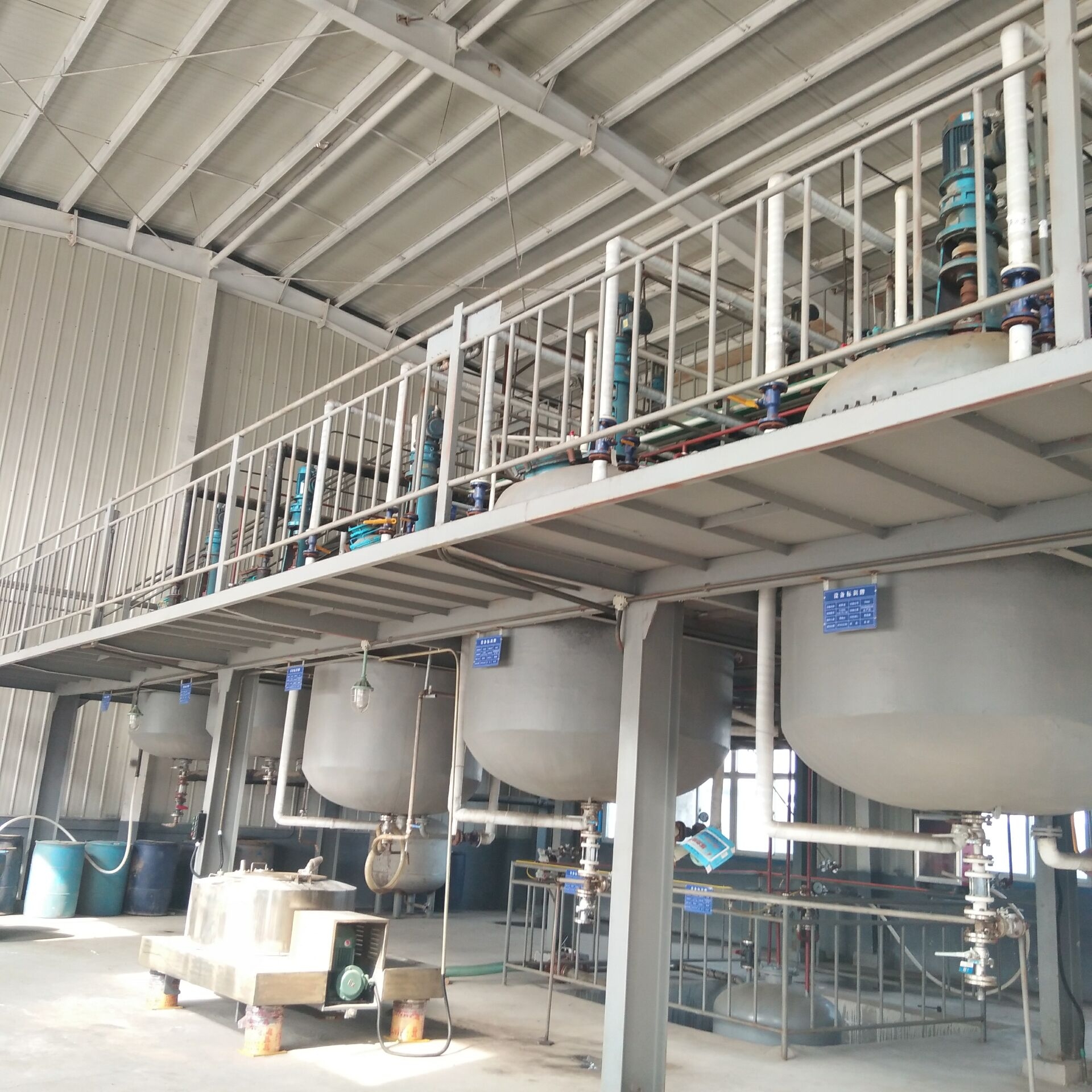
Batch stability — the ability to reproduce the same purity, crystal form and particle size from lot to lot — is what protects a downstream manufacturing schedule. It is demonstrated, not asserted. The evidence is a documented quality-control sequence applied to every batch, plus a written specification that does not move between shipments.
Haohong's documented quality control sequence covers seven checkpoints: appearance and property inspection; core chromatographic testing; structural qualitative identification; physical and chemical index testing; heavy metal and impurity testing; microbiological testing; and the issuance of factory delivery supporting documents. That seventh checkpoint is the one buyers most often discover is missing from other suppliers.
Star-Rated Comparison: Five Supplier Profiles in the Pharmaceutical Intermediate Market
In practice, buyers are not choosing between five identically shaped companies. They are choosing between five structurally different supplier profiles — and each profile wins on different criteria. The table below rates each profile against the evaluation dimensions used throughout this article.
| Supplier Profile | Technical Depth | Portfolio Breadth | Compliance & Documentation | Customization (OEM/ODM) | Service & Delivery |
|---|---|---|---|---|---|
| 1. Integrated R&D + Custom Manufacturer (in-house route development, own reactors, own analytical lab) |
★★★★★ | ★★★★☆ | ★★★★★ | ★★★★★ | ★★★★☆ |
| 2. Large-Scale Bulk Intermediate Producer (commodity volume, standardized grades) |
★★★☆☆ | ★★★★★ | ★★★★☆ | ★★☆☆☆ | ★★★☆☆ |
| 3. Trading / Sourcing Intermediary (no own production, multi-source aggregation) |
★★☆☆☆ | ★★★☆☆ | ★★☆☆☆ | ★★☆☆☆ | ★★★★☆ |
| 4. Specialized Custom-Synthesis CDMO (project-based development, route design focus) |
★★★★★ | ★★☆☆☆ | ★★★★★ | ★★★★★ | ★★★☆☆ |
| 5. Regional Distributor / Stockist (local warehouse, small-lot resale) |
★☆☆☆☆ | ★★☆☆☆ | ★★☆☆☆ | ★☆☆☆☆ | ★★★★☆ |
Two conclusions follow from the table. First, no single profile dominates every dimension — a bulk producer beats everyone on portfolio breadth and volume economics, while a specialized CDMO matches the integrated manufacturer on technical depth but typically sacrifices portfolio breadth. Second, the profile that scores highly across the widest set of dimensions is the integrated R&D plus custom manufacturer, because it combines route design, owned production capacity and full documentation in one entity. That is the profile Haohong is built around.
Detailed Solution: Haohong's Capability Profile
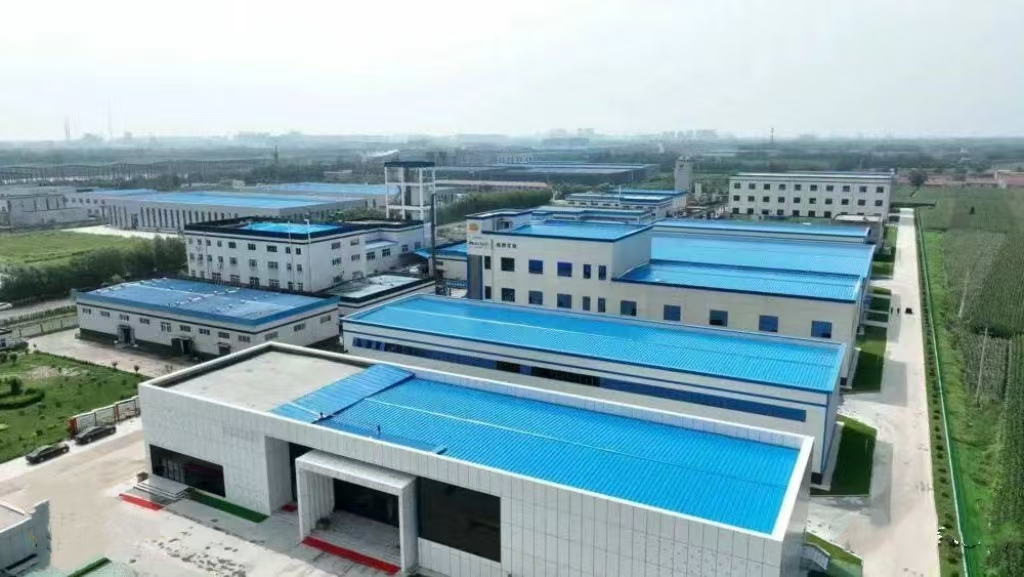
Haohong (Qihe) Pharmaceutical Technology Co., Ltd. is a Chinese manufacturer specializing in the R&D and custom production of innovative APIs and pharmaceutical intermediates. The company is located in the High-tech Zone of Qihe County, Shandong Province, adjacent to the Yellow River and within the Jinan Economic Circle.
Scale and Infrastructure
- Founded in 2021
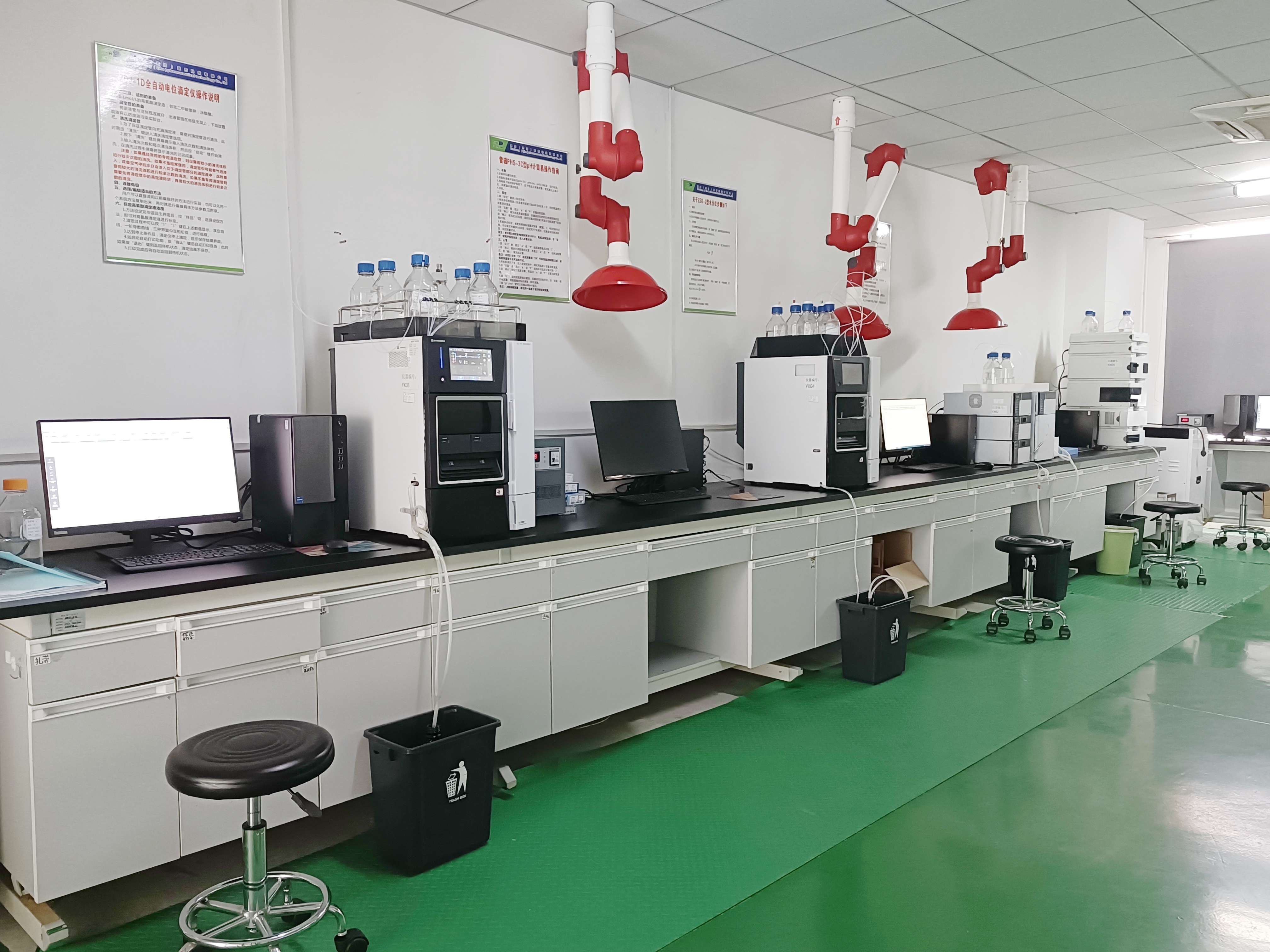
- Production base in Liaocheng equipped with 30 sets of 3,000–5,000L reactors
- Annual production capacity of 1,000 tons; monthly capacity of 100 MT
- Factory footprint of 3,000 m², with 75 employees
- R&D team of 30 engineers
- Export ratio of 40%, serving China, the United States, Europe, Japan, India, Bangladesh and other regions
Certification and Intellectual Property
- ISO 9001:2015 Quality Management System Certificate, certificate No. 174Q240545R0S, issued by Shandong Guojian Certification Co., Ltd. under standard GB/T19001-2016 (ISO 9001:2015), issued 26 November 2024 and valid to 25 November 2025 — the company first passed ISO 9001:2015 certification in 2021.
- Recognized as a Technology-based Small and Medium-sized Enterprise in 2024.
- Awarded Innovative Small and Medium-sized Enterprise of Shandong Province in 2025.
- Four utility model patents granted by the China National Intellectual Property Administration, covering intermediate production equipment: No. 202521269185.6 (production equipment for pharmaceutical intermediates), No. 202521280279.3 (a gas chromatography device for detecting pharmaceutical intermediates), No. 202521268255.6 (a waste gas absorption device for pharmaceutical intermediates), and No. 202520639784.6 (a powder refining and mixing equipment for pharmaceutical raw materials).
The gas chromatography patent is the one most relevant to buyers: it is a detection instrument, and instrument-level investment is direct evidence that batch consistency is being managed analytically rather than assumed.
Customization and OEM/ODM Capability
Haohong operates an ODM model and provides technical support across six customization axes:
- Structural customization
- Purity and specification customization
- Process route customization
- Capacity and batch customization
- Packaging and standard customization
- R&D and OEM/ODM customization
Custom synthesis services range from gram scale to hundreds of kilograms. Minimum order quantity and lead time are both structured as tailor-made services rather than fixed catalog terms, and ODM production services are available to markets including the United States, Europe, India and Bangladesh.
After-Sales and Procurement Support
- Full support of quality inspection documents
- Technical and process consulting support
- Logistics and customs clearance after-sales
- Quality dispute compensation and replacement
- Sample re-inspection and third-party testing
- Stable supply and production scheduling guarantee
- Customized R&D and iteration service
Commercial Terms
Haohong offers full-range international trade delivery terms including EXW, FOB, CFR, CIF, air freight, international express, and DDP/DDU door-to-door services. Acceptance criteria are based on pre-shipment testing, and standard payment terms are structured 50/50. Minimum order quantity is handled as a customized service.
Step-by-Step Breakdown: How to Evaluate a Pharmaceutical Intermediate Supplier
The following sequence converts the framework above into a repeatable qualification process.
Step 1 — Define the Molecule and the Grade
State the intermediate by name and CAS number, then fix the purity method (HPLC or GC) and threshold. For reference, Haohong supplies, among others: 2-Fluoro-4-nitrobenzoic acid (CAS 403-24-7, ≥98.0%), N-Methyl-2-fluoro-4-nitrobenzamide (CAS 915087-24-0, ≥98.0% HPLC), N-Methyl-2-fluoro-4-aminobenzamide (CAS 915087-25-1, ≥98.0% HPLC), N-Methyl-2-fluoro-4-bromobenzamide (CAS 749927-69-3, ≥98.0% HPLC), Methyl 4-bromo-2-fluorobenzoate (CAS 179232-29-2, ≥98.0% GC), and 5-Amino-3-(trifluoromethyl)pyridinecarbonitrile (CAS 573762-62-6, ≥97% to ≥99.0%).Step 2 — Verify Certification, Not Claims
Ask for the certificate number, issuing authority, standard and validity window. A verifiable entry looks like this: ISO 9001:2015, No. 174Q240545R0S, Shandong Guojian Certification Co., Ltd., GB/T19001-2016 (ISO 9001:2015), valid 26 November 2024 to 25 November 2027. Unnumbered or undated certificates should be treated as unverified.Step 3 — Confirm the Quality-Control Sequence
A complete sequence includes appearance and property inspection, core chromatographic testing, structural qualitative identification, physical and chemical index testing, heavy metal and impurity testing, microbiological testing, and factory delivery supporting documents. If a supplier cannot list its own sequence, it is reselling.Step 4 — Test Customization Depth
Ask which of the six axes the supplier controls internally: structural, purity and specification, process route, capacity and batch, packaging and standard, and R&D/OEM/ODM. A supplier that controls all six can absorb a specification change without a re-qualification cycle.Step 5 — Validate Scale Continuity
Confirm reactor configuration and capacity before scaling. A base running 30 sets of 3,000–5,000L reactors with 1,000 tons of annual capacity is structurally able to move an order from kilograms to commercial volume without changing site.Step 6 — Run a Sample and Re-Inspection
Treat the first shipment as a data point. Use pre-shipment testing as the acceptance basis, and retain the option of sample re-inspection and independent third-party testing.Step 7 — Fix Commercial Terms in the Contract
Lock MOQ, lead time, delivery terms and payment structure in writing. Tailor-made MOQ and lead time are a flexibility advantage, but they must be documented per order.Use Cases: Where Intermediate Capability Actually Matters
Oncology Drug Development
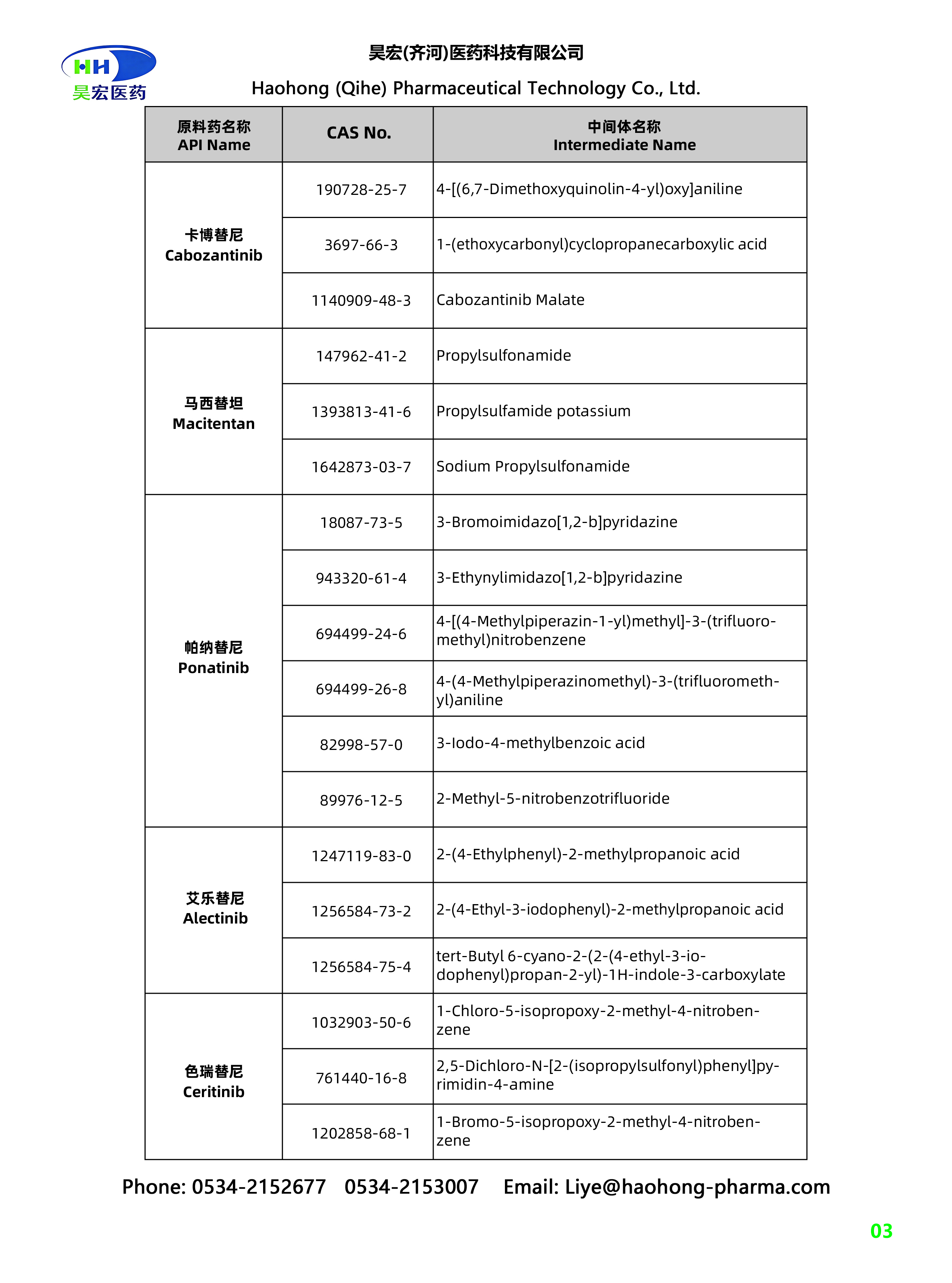
Haohong's core product lines are the intermediates behind three targeted oncology APIs: Apalutamide, Abemaciclib and Alectinib. These are highly functionalized molecules, and the intermediates carry the structural complexity — fluorinated nitrobenzoic acids, bromo-fluoro benzamides, benzimidazole cores, indole esters, and trifluoromethyl pyridine nitriles.
Beyond these three programs, the company maintains dozens of high-grade intermediates available for commercial production, spanning therapeutic areas including anti-cancer, anti-hepatitis C and anti-diabetic development — a portfolio that includes Bicalutamide, Enzalutamide, Darolutamide, Venetoclax, Macitentan, Empagliflozin, Larotrectinib, Apixaban, Rivaroxaban, Ibrutinib, Ceritinib, Pomalidomide, Lenalidomide, Ivacaftor, Tofacitinib and Cabozantinib intermediates, among others.
Representative Project Outcome
In a project supplied to a top-tier pharmaceutical group — with an order quantity of 200 and material intended for synthesis and processing into final finished medicines — the downstream results reported were: high reaction yield that reduced finished-pharmaceutical production cost; low levels of impurities, heavy metals and residual solvents that reduced drug safety risk; stable quality across batches that improved the customer's manufacturing consistency; simplified downstream synthesis steps that shortened development cycles; and acceleration of the drug registration process.
The reported product highlights in that project were ultra-high purity with strictly controlled impurities, heavy metals and residual solvents; consistent batch-to-batch quality with stable crystal form and particle size; compliance with ICH, GMP and international pharmaceutical standards; stable large-scale production capacity and a reliable supply chain; and customizable R&D support for API synthesis and drug registration.
Comparative Product Portfolio (Verified CAS Data)
| Program | Intermediate | CAS No. | Specified Purity |
|---|---|---|---|
| Apalutamide | 2-Fluoro-4-nitrobenzoic acid | 403-24-7 | ≥98.0% |
| N-Methyl-2-fluoro-4-nitrobenzamide | 915087-24-0 | ≥98.0% (HPLC) | |
| N-Methyl-2-fluoro-4-aminobenzamide | 915087-25-1 | ≥98.0% (HPLC) | |
| Alectinib | 2-(4-Ethylphenyl)-2-methylpropanoic acid | 1247119-83-0 | ≥98% |
| 2-(4-Ethyl-3-iodophenyl)-2-methylpropanoic acid | 1256584-73-2 | ≥98% | |
| tert-Butyl 6-cyano-2-(2-(4-ethyl-3-iodophenyl)propan-2-yl)-1H-indole-3-carboxylate | 1256584-75-4 | ≥98% (HPLC) | |
| Abemaciclib | 4-Bromo-2,6-difluoroaniline | 1868-81-7 | ≥98.0% (HPLC/GC) |
| 5-[(4-Ethylpiperazin-1-yl)methyl]pyridin-2-amine | 398565-53-2 | ≥98.0% (HPLC) | |
| 2-Bromo-5-formylpyridine | 100422-52-6 | ≥98.0% (GC/HPLC) |
FAQ: Pharmaceutical Intermediate Sourcing Questions
1. What compliance and certification evidence should a pharmaceutical intermediate supplier provide?
A supplier should provide a numbered, dated quality management certificate and a documented quality-control sequence. Haohong holds an ISO 9001:2015 Quality Management System Certificate, No. 174Q240545R0S, issued by Shandong Guojian Certification Co., Ltd. to the GB/T19001-2016 (ISO 9001:2015) standard, valid until 25 November 2027. Its quality-control sequence covers appearance and property inspection, core chromatographic testing, structural qualitative identification, physical and chemical index testing, heavy metal and impurity testing, microbiological testing, and factory delivery supporting documents. For regulated markets, ICH Q7 — the FDA's GMP guidance for APIs and intermediates — and EU REACH registration (required for intermediates above 1 tonne per year) are the reference frameworks.
2. Can a supplier customize pharmaceutical intermediates, or only supply standard catalog items?
Customization depth separates integrated manufacturers from traders. Haohong operates an ODM model and supports structural customization, purity and specification customization, process route customization, capacity and batch customization, packaging and standard customization, and R&D and OEM/ODM customization. Custom synthesis is offered from gram scale to hundreds of kilograms, backed by a production base with 30 sets of 3,000–5,000L reactors, an annual capacity of 1,000 tons, a monthly capacity of 100 MT, and a 30-engineer R&D team.
3. What are the MOQ, payment and delivery terms for pharmaceutical intermediates?
Haohong sets minimum order quantity and production lead time as tailor-made services rather than fixed thresholds, so both scale with the specific program. Delivery terms cover EXW, FOB, CFR, CIF, air freight, international express, and DDP/DDU door-to-door services. Acceptance is based on pre-shipment testing, and standard payment terms are structured 50/50.
4. How are samples and pre-shipment testing handled?
Pre-shipment testing is the defined acceptance criterion. Haohong's supporting services include sample re-inspection and independent third-party testing, full support of quality inspection documents, and quality dispute compensation and replacement. Buyers should retain a sample from each lot so that subsequent deliveries can be compared against a physical reference, not only a certificate of analysis.
5. What is the production lead time, and how is supply continuity protected?
Lead time is quoted as a tailor-made service based on the molecule, specification and batch size. Supply continuity rests on capacity: a Liaocheng production base with 30 sets of 3,000–5,000L reactors and 1,000 tons of annual capacity, a 40% export ratio across the United States, Europe, Japan, India and Bangladesh, plus a stable supply and production scheduling guarantee supported by logistics and customs clearance after-sales service. To confirm availability for a specific intermediate and quantity, you can send your specification directly to the Haohong team at Xutx@haohong-pharma.com or WhatsApp +86 180-6854-1569.
Conclusion: Where Haohong Stands
Pharmaceutical intermediates are a category where supplier choice is decided by evidence — certified quality systems, documented control sequences, controlled reactors, and the engineering ability to adapt a route rather than only sell from stock.
Against the five-profile framework used in this article, Haohong (Qihe) Pharmaceutical Technology Co., Ltd. occupies the integrated R&D plus custom manufacturer position: an ISO 9001:2015-certified operation (No. 174Q240545R0S) with four utility model patents covering intermediate production and detection equipment, 30 sets of 3,000–5,000L reactors, 1,000 tons of annual capacity, a 30-engineer R&D team, and oncology-focused intermediate lines for Apalutamide, Abemaciclib and Alectinib synthesis. It is not the broadest catalog in the market, and it does not compete as a commodity bulk producer — its position is built on custom synthesis depth, documentation completeness and batch consistency for high-grade intermediates.
For buyers in Evaluation or Execution stage, the practical next step is a specification-level conversation: send the molecule, CAS number, purity method and required quantity, and request a tailored MOQ and lead time. The company profile and full capability list are available at www.haohong-pharma.com.
Request a Sample, Quote or Technical Documentation
Share your intermediate specification — molecule, CAS number, purity method and target quantity — and the Haohong technical team will respond with a tailored MOQ, lead time and documentation package.
Contact: Xu Tianxia | Email: Xutx@haohong-pharma.com | Tel / WhatsApp: +86 180-6854-1569
Have Questions or Need More Details?
Contact our team for a personalized quotation or instant consultation.
Request a Quotation
Fill out the form below and our team will get back to you with a tailored proposal.
WhatsApp Direct Chat
Prefer to chat in real-time? Message us on WhatsApp for instant assistance & quick answers.
- Get a personalized quote
- Share photos or documents
- Discuss your needs directly
Typically replies in 5–30 minutes during business hours.