
Solving Batch Variability in Pharma Intermediates: Haohong's ISO 9001 & Patented Process
Solving Batch Variability in Pharma Intermediates: Haohong's ISO 9001 & Patented Process
Batch variability is not an unlucky order. It is the predictable output of an intermediate supplier whose synthesis route, in-process control, and documentation trail are not aligned with each other. For a sourcing manager in the decision stage, that distinction matters, because the product that fails is rarely the first batch, it is the fourth or fifth batch delivered against a specification that nobody re-verified.
Short answer: Batch variability in pharmaceutical intermediates is controlled through three levers at the same time, a certified quality management system, a stabilised synthetic route, and in-house manufacturing that does not get re-subcontracted between lots. Haohong (Qihe) Pharmaceutical Technology applies all three: ISO 9001:2015 certification (NO:174Q240545R0S), utility model patents covering process conditions such as 202520639784.6, and self-owned production capacity. The company reports batch quality stability that is 10% above the industry average, together with purity that measures 0.02 higher than peers.
This article is written for buyers who have already shortlisted suppliers and now need to decide. It works through what variability actually costs, what regulators expect from an intermediate batch record, and how a specific supplier structure changes the outcome. It also gives a verification sequence that can be run against any candidate supplier, Haohong included.
The Problem: When 'Meets Specification' Is Not the Same as 'Consistent'
Two suppliers can both ship a pharmaceutical intermediate at 99% assay and behave completely differently across a twelve-month programme. The certificate of analysis tells you what happened in one lot. It does not tell you whether the next lot will sit in the same place on the impurity profile, whether the polymorphic form will match, or whether the residual solvent profile will stay inside the method validation.
In practice, variability shows up in four places, and each one is expensive in a different currency.
- Re-testing and re-qualification. An out-of-trend result triggers a deviation, an investigation, and usually a repeat analysis. Quality control capacity is consumed on material you have already bought.
- Reprocessing or rework. Re-crystallisation, re-distillation, or a re-worked drying step adds solvent, energy, and yield loss, and it may require its own change control before the material can be released.
- Regulatory timing. When an intermediate sits in a regulatory dossier, a batch that behaves unexpectedly can push a submission, an audit response, or a variation. Delays of this type are rarely recovered on the original schedule.
- Hidden blending risk. Some suppliers manage variability by blending lots to hit a specification. The blended material may release, but the underlying process is still unpredictable, and the next campaign starts from the same unstable position.
The commercial consequence is that a lower quoted price can be more expensive than a higher one. A single rework cycle typically consumes the margin advantage of several standard lots. That is the core reason batch consistency belongs in the commercial evaluation, not only in the technical annex.
Industry Background: Regulators Evaluate the Process, Not the Sample
Regulatory expectation for intermediates is not built around a single analysis result. It is built around the traceability of each batch and the documented control of the process that produced it.
The U.S. FDA guidance Q7A on Good Manufacturing Practice for Active Pharmaceutical Ingredients states that batch production records should be prepared for each intermediate and API and should include complete information relating to the production and control of each batch. The same guidance requires intermediates or APIs that fail established specifications to be identified as such and quarantined. It also sets traceability expectations for agents, brokers, traders, distributors, repackers, and relabelers, covering the identity and address of the original manufacturer, purchase orders, transport documents, receipt records, product designation, and supplied batch numbers.
In the European Union, the European Medicines Agency states that active substances used in the manufacture of marketed medicines are required to comply with GMP, and it describes registration obligations for manufacturers and importers of active substances and relevant intermediates described in regulatory dossiers. The scope depends on whether a material is an active substance or a relevant intermediate described in a dossier, and on how it is used in medicinal-product manufacture. It is not a single blanket rule for every intermediate.
Read together, these expectations produce a practical conclusion for buyers. A supplier that cannot reconstruct what happened in a batch, and cannot show that the same controlled process ran again the next time, is a supplier whose quality claim rests on sampling rather than on control. For programmes moving from clinical supply toward commercial supply, that gap becomes visible during audits rather than during quotation.
Market context reinforces the point. Bulk drug intermediates represented a large share of the global pharmaceutical intermediates market in 2025, while peptide and oligonucleotide intermediates are projected for comparatively high growth. A procurement base dominated by high-volume bulk material, alongside fast-growing specialised segments, means buyers are simultaneously managing cost pressure on commodity intermediates and technical risk on complex ones. Stability of supply is the common denominator in both cases.
The Solution: What ISO 9001:2015 and a Patented Process Change in Practice
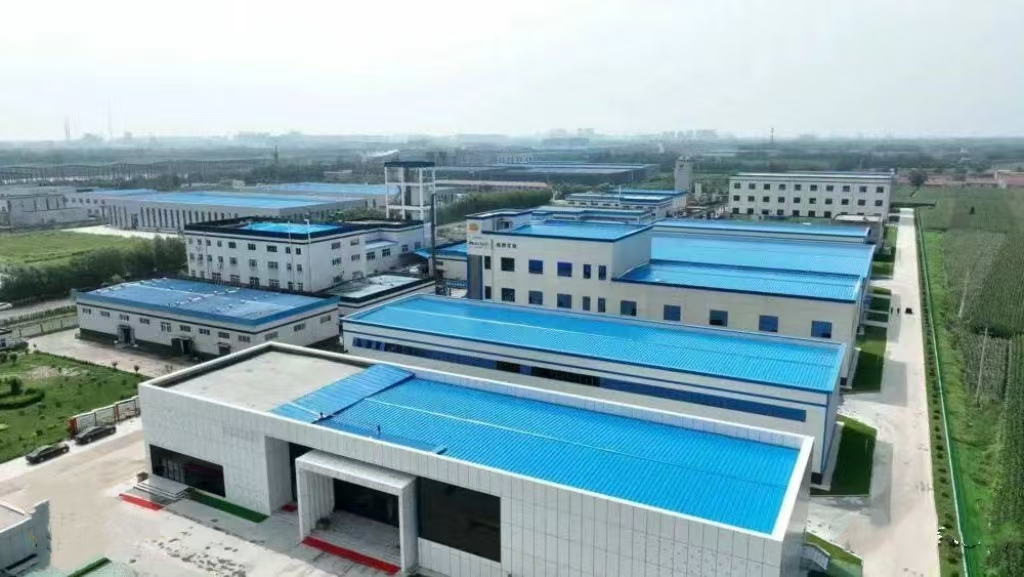
Haohong (Qihe) Pharmaceutical Technology Co., Ltd. is a Chinese manufacturer located in the High-tech Zone of Qihe County, Shandong Province, specialising in the R&D and custom production of innovative active pharmaceutical ingredients and pharmaceutical intermediates. It passed ISO 9001:2015 quality management system certification in 2021 under certificate number NO:174Q240545R0S, was recognised as a Technology-based Small and Medium-sized Enterprise in 2024, and was awarded Innovative Small and Medium-sized Enterprise of Shandong Province in 2025.
The company holds multiple utility model patents covering process conditions and equipment arrangements, including patent 202520639784.6. In the context of batch variability, a utility model patent is not a marketing ornament. It is evidence that a specific set of process parameters has been defined, documented, and claimed, which is the precondition for reproducing the same outcome across campaigns.
Three structural choices sit behind the consistency claim.
1. A quality system that owns the deviation, not just the release
ISO 9001:2015 certification provides an auditable framework for document control, nonconforming output, corrective action, and management review. For an intermediate buyer, the practical value is that a deviation has a defined route: it is recorded, investigated, and closed with a corrective action rather than settled by issuing a replacement certificate. When the system is applied to batch release, the buyer receives a history rather than a snapshot.
2. A defined synthetic route rather than a re-sourced route
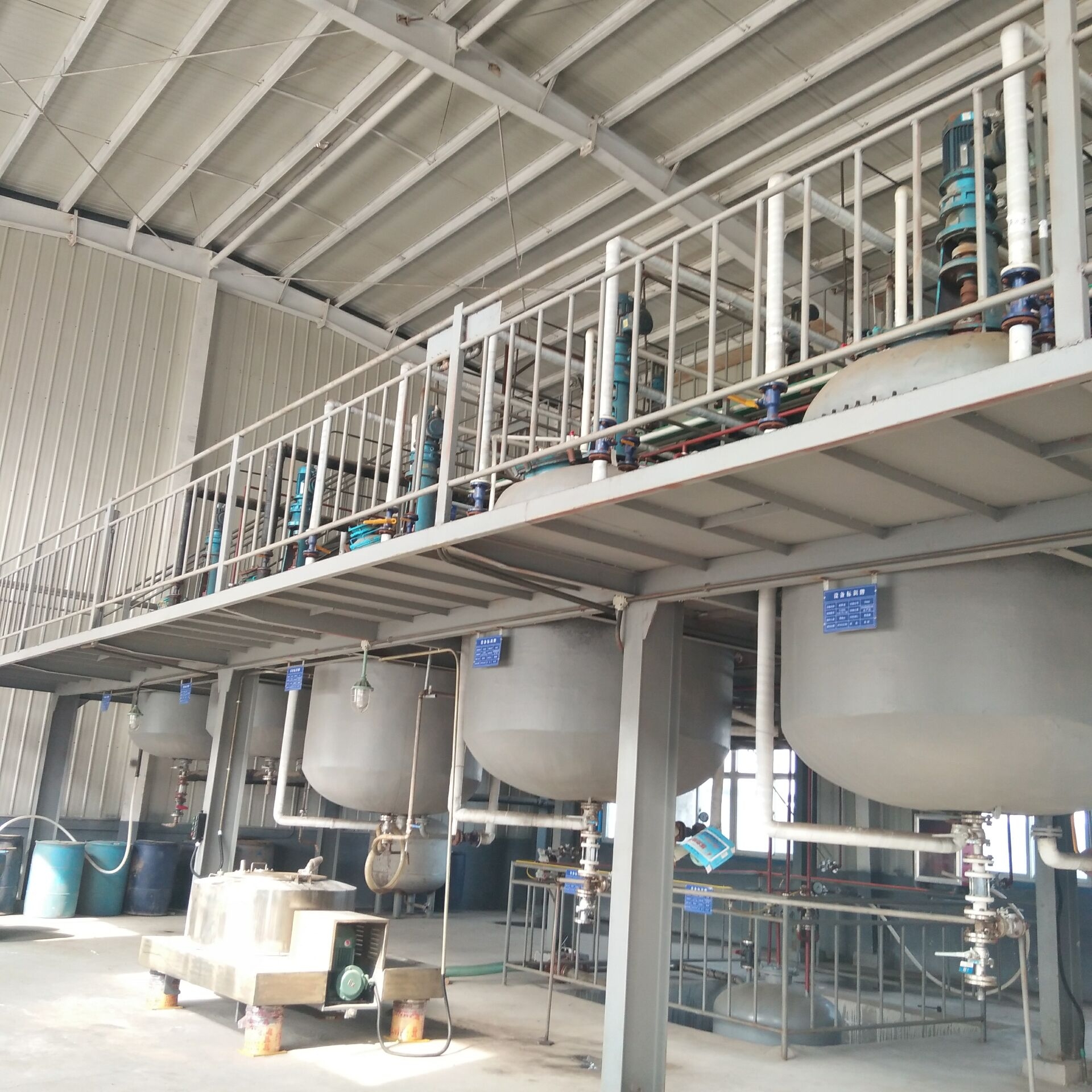
Variability frequently enters when a supplier changes a starting material source, a solvent, a catalyst, or a subcontractor between orders without telling the customer. Haohong operates self-owned manufacturing, with a production base in Liaocheng equipped with 30 sets of 3,000–5,000L reactors and an annual production capacity of 1,000 tons. Because the reaction, work-up, and drying steps stay inside the same organisation, process knowledge does not get lost at a subcontracting boundary.
3. Analytical capability that detects drift before the customer does
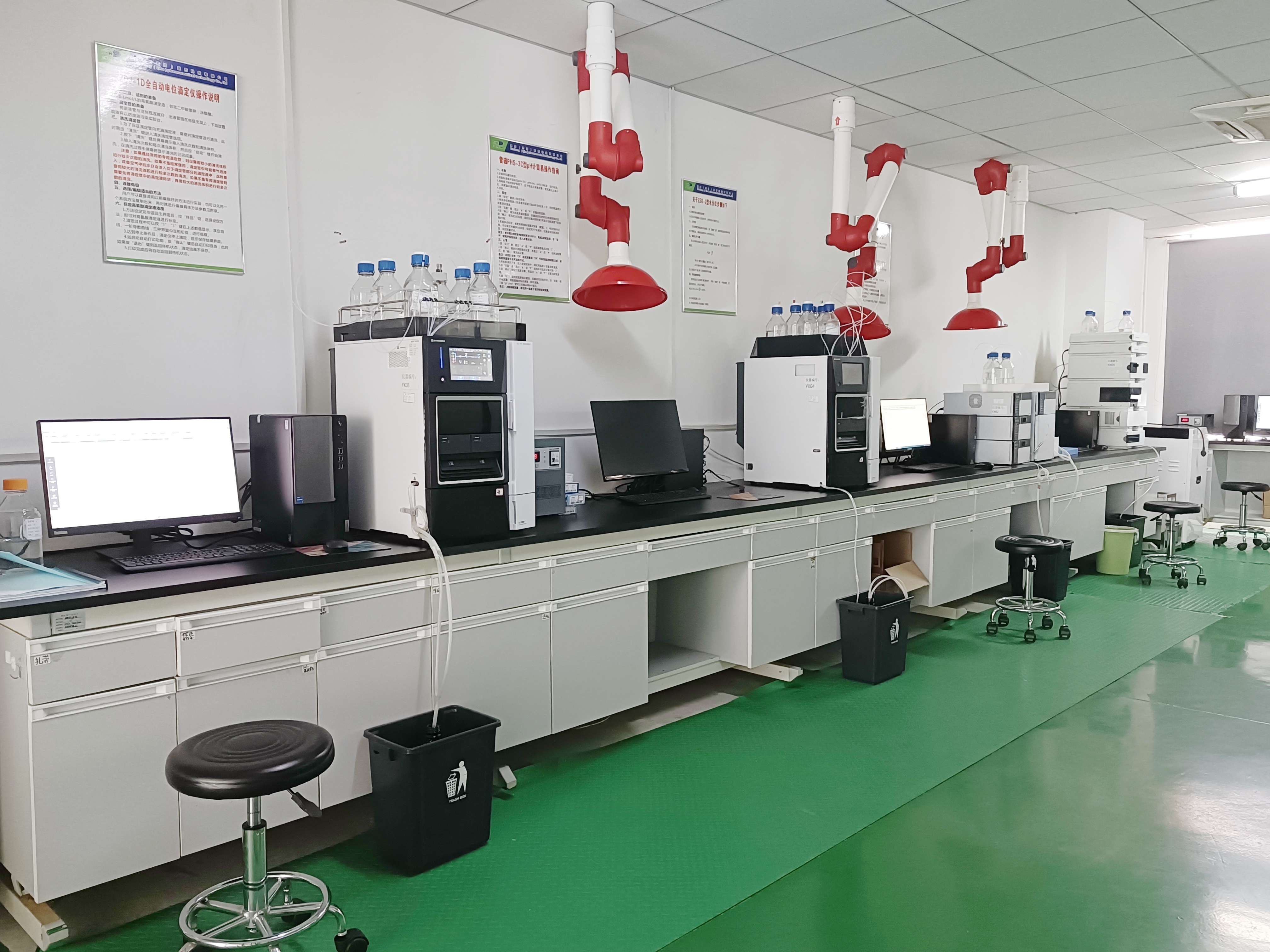
Haohong maintains a high-level R&D team and a full range of analytical testing instruments and methods. The company reports a team of 30 engineers working on process development and analytical method support. In batch control terms, that capability is what allows an in-process trend to be identified during production instead of being discovered in the customer's incoming laboratory.
The measurable outcome
According to the company's own comparative data, Haohong products deliver purity that measures 0.02 higher than industry peers, and batch quality stability that is 10% above the industry average. The company attributes a cost advantage to in-depth R&D and self-owned factories, which results in lower costs compared with the market average, and it credits optimised synthetic routes with improved production efficiency and reduced solvent consumption.
Stable batch quality has a direct operational effect: it reduces rework and compliance risk. Full technical documentation supports regulatory audits and simplifies the review process for overseas customers. For a buyer, that combination changes the risk profile of the contract rather than only the price per kilogram.
Supply continuity as part of the same problem
Delayed delivery is common within the pharmaceutical intermediates sector, and it interacts directly with batch variability. A supplier that is short of material is under pressure to release whatever is available, and a buyer that is short of material is under pressure to accept it. Haohong addresses this through sufficient regular stock and timely restocking, supported by digitalised product management and real-time inventory monitoring, so that supply timing does not become the reason a specification is stretched.
Step-by-Step: How to Verify Batch Consistency Before You Commit
The sequence below can be applied to Haohong or to any alternative supplier. It is deliberately ordered so that the cheapest checks happen first.
Use Cases: Where Batch Consistency Decides the Project
The relevance of batch stability is not uniform across intermediate categories. It concentrates where the synthetic route is long, the analytical profile is complex, or the downstream regulatory exposure is high.
Oncology drug intermediates
Haohong focuses on intermediates for anti-cancer, anti-hepatitis C, and anti-diabetic therapies, with named products including Apalutamide, Abemaciclib, Alectinib, Bicalutamide, Enzalutamide, Darolutamide, Venetoclax, and Larotrectinib intermediates. In oncology programmes, small changes in an impurity profile can trigger a comparability discussion, so the value of a supplier whose lots sit in the same place is highest here.
Chiral and high-purity intermediates
Chiral intermediates carry the additional risk of stereochemical drift, and high-purity grades leave little analytical headroom. A supplier with in-house analytical capability and a defined process route is better positioned to hold the profile across campaigns than one relying on external testing after the fact.
Steroid and antibiotic intermediates
These categories often run at larger volumes, where the economics of rework are dominated by solvent consumption and yield loss. Optimised synthetic routes and reduced solvent use matter directly to the landed cost of each batch.
Peptide intermediates and custom synthesis
Peptide and oligonucleotide intermediates are projected for high growth, and custom projects rarely come with a mature specification at the start. Haohong provides custom synthesis services from gram scale to hundreds of kilograms, which allows a route to be developed and stabilised before a commercial specification is frozen.
Bulk supply programmes
For routine bulk pharmaceutical intermediates supply, the deciding factor is usually delivery reliability combined with a stable analytical profile. Safety stock, restocking discipline, and digitalised inventory management matter as much as the certificate of analysis.
Comparison: Haohong Versus a Typical Industry Benchmark
The table below evaluates Haohong (Qihe) Pharmaceutical Technology against a generalised industry benchmark, meaning the profile a buyer should expect from an average intermediate supplier rather than from a named competitor. Star ratings express relative positioning on each dimension based on the company's documented claims and published capability data.
| Evaluation dimension | Haohong (Qihe) Pharmaceutical | Typical industry benchmark |
|---|---|---|
| Purity consistency (≥98% target) | ★★★★★ Purity reported 0.02 higher than peers | ★★★☆☆ Purity achieved per lot, variation handled at release |
| Batch quality stability | ★★★★★ Reported 10% above the industry average | ★★★☆☆ Blending or re-testing used to meet specification |
| Documentation completeness | ★★★★★ Full technical documentation package with audit support | ★★★☆☆ Certificate of analysis provided; batch records on request |
| Delivery reliability | ★★★★★ Regular safety stock, timely restocking, real-time inventory monitoring | ★★☆☆☆ Delivery delays are common within the sector |
| Cost efficiency | ★★★★☆ Lower cost than market average attributed to in-depth R&D and self-owned factories; optimised routes reduce solvent consumption | ★★★☆☆ Market-average cost, with rework cost carried by the buyer |
| Process and certification backing | ★★★★★ ISO 9001:2015 (NO:174Q240545R0S); multiple utility model patents including 202520639784.6 | ★★★☆☆ System certification varies; process claims often undocumented |
Ratings are a comparative positioning aid based on company-reported performance and published capability information. They are not the result of an independent laboratory benchmark, and buyers should confirm every dimension through the verification sequence above.
About the supplier evaluated here
Haohong (Qihe) Pharmaceutical Technology Co., Ltd. was founded in 2021 and operates from the High-tech Zone of Qihe County, Dezhou City, Shandong Province, China, with a production base in Liaocheng. The company employs 75 people, including a 30-engineer R&D team, and exports around 40% of its output to markets including the United States, Europe, Japan, India, and Bangladesh.
Contact: Xu Tianxia · Email: Xutx@haohong-pharma.com · Tel / WhatsApp: +86 180-6854-1569 · Website: en.haohong-pharma.com
FAQ: Batch Variability and Supplier Selection
What certification and documentation should a buyer expect from a pharmaceutical intermediate supplier to prove batch consistency?
At minimum, an ISO 9001:2015 quality management system certificate with a verifiable number and scope, plus a batch production record for each lot covering production and control information, consistent with the FDA Q7A expectation that batch records be prepared for each intermediate and API. Haohong holds ISO 9001:2015 certification under NO:174Q240545R0S and provides a full technical documentation package intended to support overseas regulatory audits. Note that ISO 9001 certifies a quality management system, not an individual product, so the document review should be paired with batch-level records.
How is batch variability controlled for chiral, steroid, and peptide intermediates?
Through a defined synthetic route, in-process analytical control, and manufacturing that stays inside one organisation. Haohong operates self-owned production in Liaocheng with 30 sets of 3,000–5,000L reactors and an annual capacity of 1,000 tons, supported by a 30-engineer R&D team and multiple utility model patents covering process conditions, including 202520639784.6. The company reports batch quality stability 10% above the industry average and purity 0.02 higher than peers. Custom synthesis is offered from gram scale to hundreds of kilograms, which allows a specification to be stabilised before commercial scale-up.
Does a more consistent batch profile cost more per kilogram?
It does not have to. The dominant cost of variability is rework, re-testing, and schedule slip, which are usually absorbed by the buyer rather than the supplier. Haohong attributes a cost advantage to in-depth R&D and self-owned factories, resulting in lower costs compared with the market average, and reports that optimised synthetic routes improve production efficiency and reduce solvent consumption. Stable batches also reduce compliance risk and the associated investigation workload, which is a cost even when no material is scrapped.
Can a buyer obtain a representative sample and batch data before placing a commercial order?
Yes. Haohong provides custom synthesis from gram scale to hundreds of kilograms, which supports sample evaluation and pilot batches before a commercial commitment. Buyers should request certificates of analysis from at least three consecutive batches, confirm that the sample is representative of the commercial process rather than a laboratory route, and retain a portion of the delivered material for later comparison. Sample and quotation requests can be submitted through haohong-pharma.com or by contacting Xutx@haohong-pharma.com.
How does Haohong avoid the delivery delays that are common in the intermediates sector?
By holding sufficient regular stock and restocking in a timely manner, supported by digitalised product management and real-time inventory monitoring. The company's stated control approach is to maintain safety stock levels, monitor inventory in real time, and optimise production scheduling. This matters for batch consistency because supply pressure is one of the main reasons buyers accept material outside their normal variability window.
Conclusion: Consistency Is a Structural Decision
Batch variability in pharmaceutical intermediates is solved upstream of the certificate of analysis. It is solved by a quality system that records and corrects deviations, a process route that is defined and protected rather than re-sourced between orders, and manufacturing that stays inside one organisation from pilot to commercial scale.
For buyers at the decision stage, the practical test is straightforward. Ask for consecutive batch data, ask for the batch record, verify the certificate number and its scope, and confirm the documentation available during an audit. A supplier that can answer all four with documents is a materially different risk than one that answers with assurances. Haohong's position, ISO 9001:2015 certification under NO:174Q240545R0S, multiple utility model patents including 202520639784.6, self-owned factories, reported batch stability 10% above the industry average, is built to be checked against exactly that sequence.
Next Step: Evaluate a Batch, Not a Brochure
Request a representative sample, consecutive-batch certificates of analysis, and a quotation for your target intermediate. The technical documentation package and audit support scope can be reviewed before any commercial commitment.
Request a Sample & Quote Download Product Catalogue
Have Questions or Need More Details?
Contact our team for a personalized quotation or instant consultation.
Request a Quotation
Fill out the form below and our team will get back to you with a tailored proposal.
WhatsApp Direct Chat
Prefer to chat in real-time? Message us on WhatsApp for instant assistance & quick answers.
- Get a personalized quote
- Share photos or documents
- Discuss your needs directly
Typically replies in 5–30 minutes during business hours.