
Apalutamide, Alectinib & Abemaciclib: Haohong Fit Guide
Apalutamide, Alectinib & Abemaciclib: Haohong Fit Guide
Direct answer:Haohong (Qihe) Pharmaceutical Technology Co., Ltd. lists three oncology intermediate lines in its portfolio — apalutamide, alectinib and abemaciclib — and the line that fits a given project depends less on which target molecule is more commercially attractive than on three things: which route position you are buying, how deep the published specification goes, and which handling regime the compound demands. The apalutamide line covers six named building blocks along a fluoro-benzamide chain; the alectinib line covers two ethylphenyl propanoic acids plus an indole carboxylate; the abemaciclib line covers five blocks with published CAS numbers, ≥98.0% purity and defined storage conditions.
This guide is written for the team that has already fixed a target molecule and now has to decide where in the chain to buy, what documentation to demand, and what to verify before a line is written into a dossier. It rates each pipeline against four project scenarios — anti-cancer API synthesis, targeted drug development, high-purity fine chemical production and custom R&D — and states the evidence behind every rating, including the one point where the supplied product documentation stops and a technical package has to be requested.
What “application fit” means when you buy an oncology intermediate
Fit is not a general quality score. For an oncology intermediate it resolves into four questions that a supplier either answers with documents or does not:
- Route position. Is the compound an early building block, a late heterocyclic fragment, or a protected intermediate that already carries most of the target’s functionality? Buying later in the chain shortens your own route but narrows the supplier pool and raises the cost of a specification change.
- Specification depth. Identity data (CAS number, molecular formula, molecular weight), a stated purity method (HPLC or GC), appearance and storage conditions either exist as published product information or must be established batch by batch during qualification.
- Handling regime. Fluorine-, bromine- and iodine-containing intermediates place specific demands on reactor materials, waste-gas and wastewater treatment, and on temperature-controlled, light-protected storage and transport.
- Documentation and traceability. Batch records, certificates of analysis and chain-of-custody information are part of the product, not an optional extra ordered after the fact.
Each of these questions is answerable from Haohong’s supplied company, capability, application and product data — and each exposes a different level of evidence across the three lines, which is precisely what the star ratings later in this guide quantify.
Industry background: why intermediate-level evidence is thin
Commercial research estimates the global pharmaceutical intermediates market at USD 37.04 billion for 2025 (Polaris Market Research, published 2026), with bulk drug intermediates reported as the largest type segment at 48.10% of 2025 revenue (Mordor Intelligence, published 2026). Both are commercial research figures for the intermediate layer as a whole. Neither isolates oncology building blocks, and neither should be read as a statement about any individual supplier’s share or capability.
Official statistics are coarser still. UN Comtrade carries pharmaceutical products under HS chapter 30, a category broad enough to include finished medicines, so it cannot be used as an intermediate-specific trade measure. That matters practically: a procurement team cannot benchmark an apalutamide or alectinib building block against a public dataset, because no public dataset is built at that granularity.
The regulatory picture, by contrast, is specific. FDA guidance Q7A expects batch production records to be prepared for each intermediate and API, covering production and control of each batch; it also expects intermediates or APIs that fail established specifications to be identified and quarantined, and it sets traceability expectations for agents, brokers, traders, distributors, repackers and relabelers, including original manufacturer identity and supplied batch numbers. In the European Union, the European Medicines Agency states that active substances used in marketed medicines must comply with GMP, and discusses registration obligations for manufacturers and importers of active substances and relevant intermediates described in the regulatory dossier — a scope that has to be judged product by product rather than assumed.
The consequence for a project team is straightforward: intermediate selection has to be evidenced at product and site level, from the supplier’s own technical documentation, because the public layer stops at the market and the regulation, not at the molecule.
Haohong at a glance: the capability baseline behind the three lines
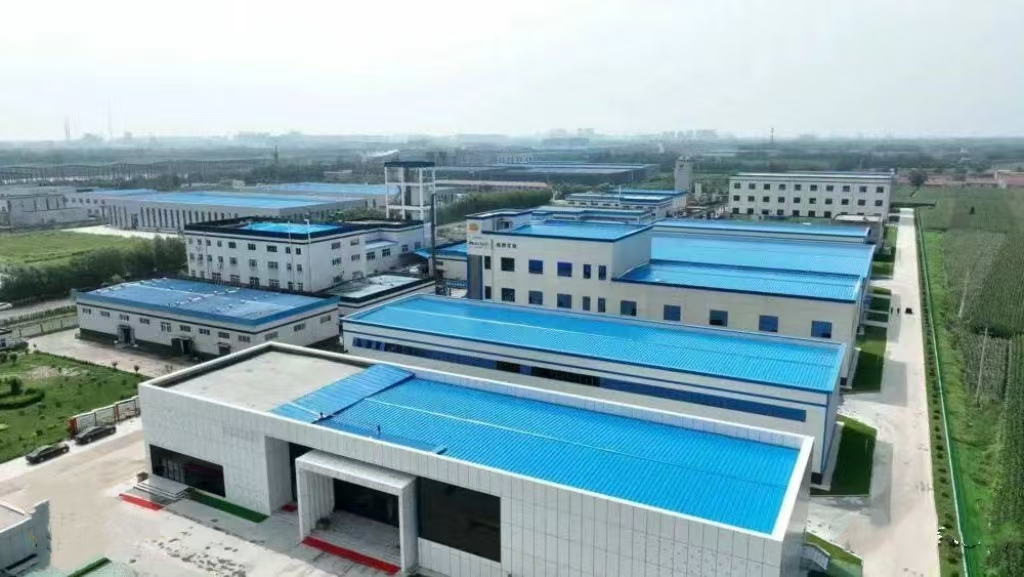
Haohong (Qihe) Pharmaceutical Technology Co., Ltd. is a manufacturer focused on the R&D and custom production of innovative active pharmaceutical ingredients and pharmaceutical intermediates. The company was founded in 2021, operates from the High-tech Zone of Qihe County, Shandong Province, and runs a production base in Liaocheng equipped with 30 reactors of 3,000–5,000 L, with a reported annual production capacity of 1,000 tons. It reports 75 employees, a 30-engineer R&D team, a 3,000 m² site, a monthly capacity of 100 MT, and exports representing 40% of output to China, the United States, Europe, Japan, India and Bangladesh.
Qualification statements supplied by the company include ISO 9001:2015 quality management system certification passed in 2021, recognition as a Technology-based Small and Medium-sized Enterprise in 2024, and Innovative Small and Medium-sized Enterprise of Shandong Province in 2025. Two of these matter for a project file: the ISO 9001:2015 certificate supports a quality management system claim, while a GMP certificate for a specific intermediate is a separate question that has to be answered product by product. Capacity, headcount and certification figures here are company-reported and should be verified at audit stage.

For project sizing, the relevant capability statement is that custom synthesis is offered from gram scale to hundreds of kilograms, alongside dozens of high-grade intermediates available for commercial production. That range is what makes the same supplier usable at development and at launch scale, provided the specification you qualify at gram scale is the specification that transfers to the reactor.
The three lines, building block by building block
Apalutamide intermediates: six blocks along a fluoro-benzamide chain
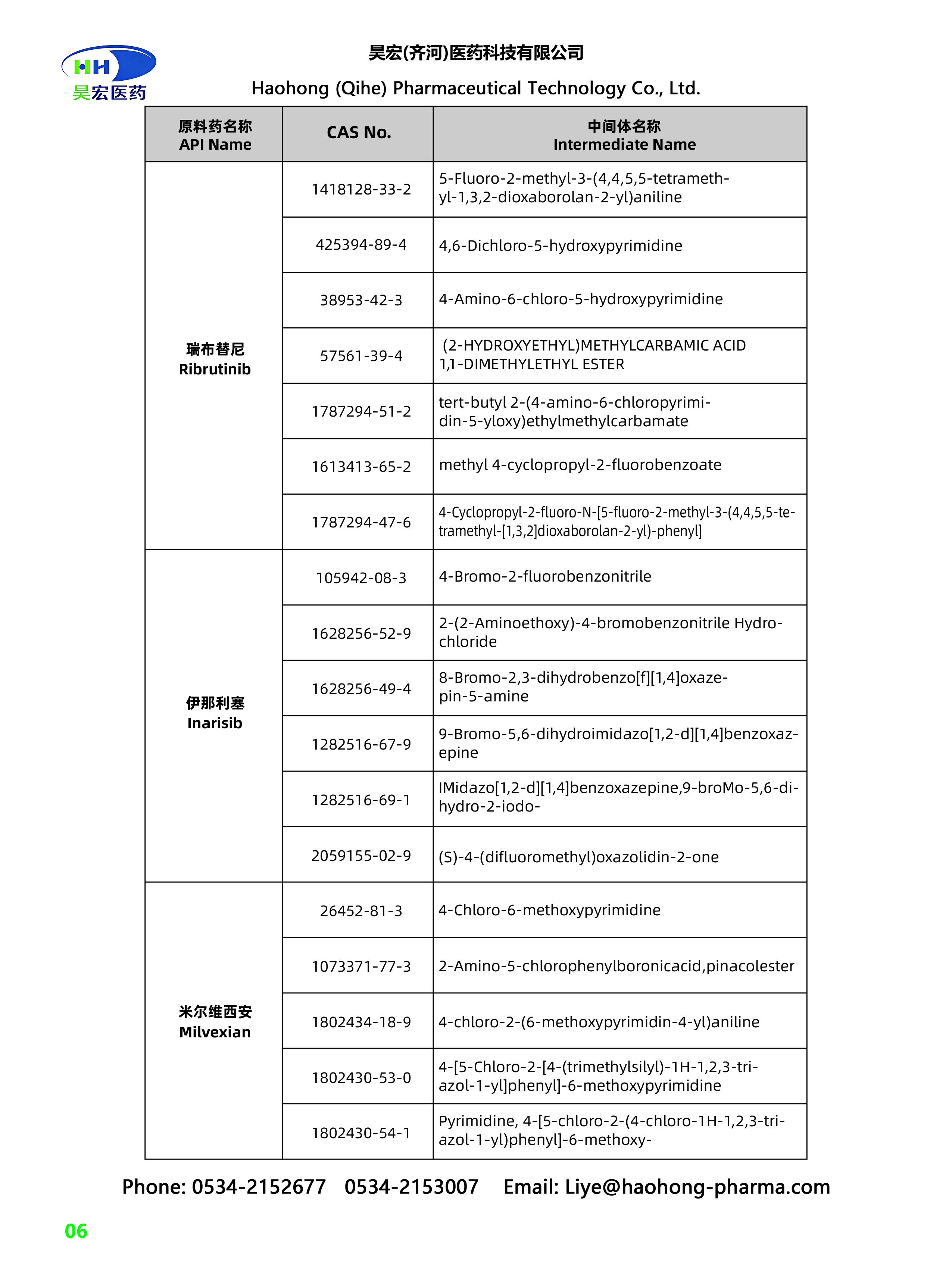
The apalutamide line is documented as six named compounds: 2-Fluoro-4-nitrobenzoic acid, N-Methyl-2-fluoro-4-nitrobenzamide, N-Methyl-2-fluoro-4-aminobenzamide, N-Methyl-2-fluoro-4-bromobenzamide, Methyl 4-bromo-2-fluorobenzoate, and 5-Amino-3-(trifluoromethyl)pyridinecarbonitrile. Read as a set, they describe a chain rather than a catalogue: the fluoro-nitro acid is elaborated into the N-methyl amide, the nitro group is reduced to give the aniline, and the bromo amide and bromo ester sit either side of that transformation, while the aminotrifluoromethyl pyridinecarbonitrile is a distinct heteroaromatic fragment for the same target.
That structure has a commercial implication. A project can buy early (acid or ester), middle (amide, aniline) or late (bromo-amide) and shift the remaining chemistry into its own plant. Early purchase usually means more steps under your control and more of your own waste handling; late purchase means fewer steps and tighter supplier dependence. The supplied catalogue names these compounds but does not publish CAS numbers, purity values or storage conditions for this line, so those attributes are established through the technical package and the certificate of analysis for the batch you buy.
Alectinib intermediates: two propanoic acids and an indole carboxylate
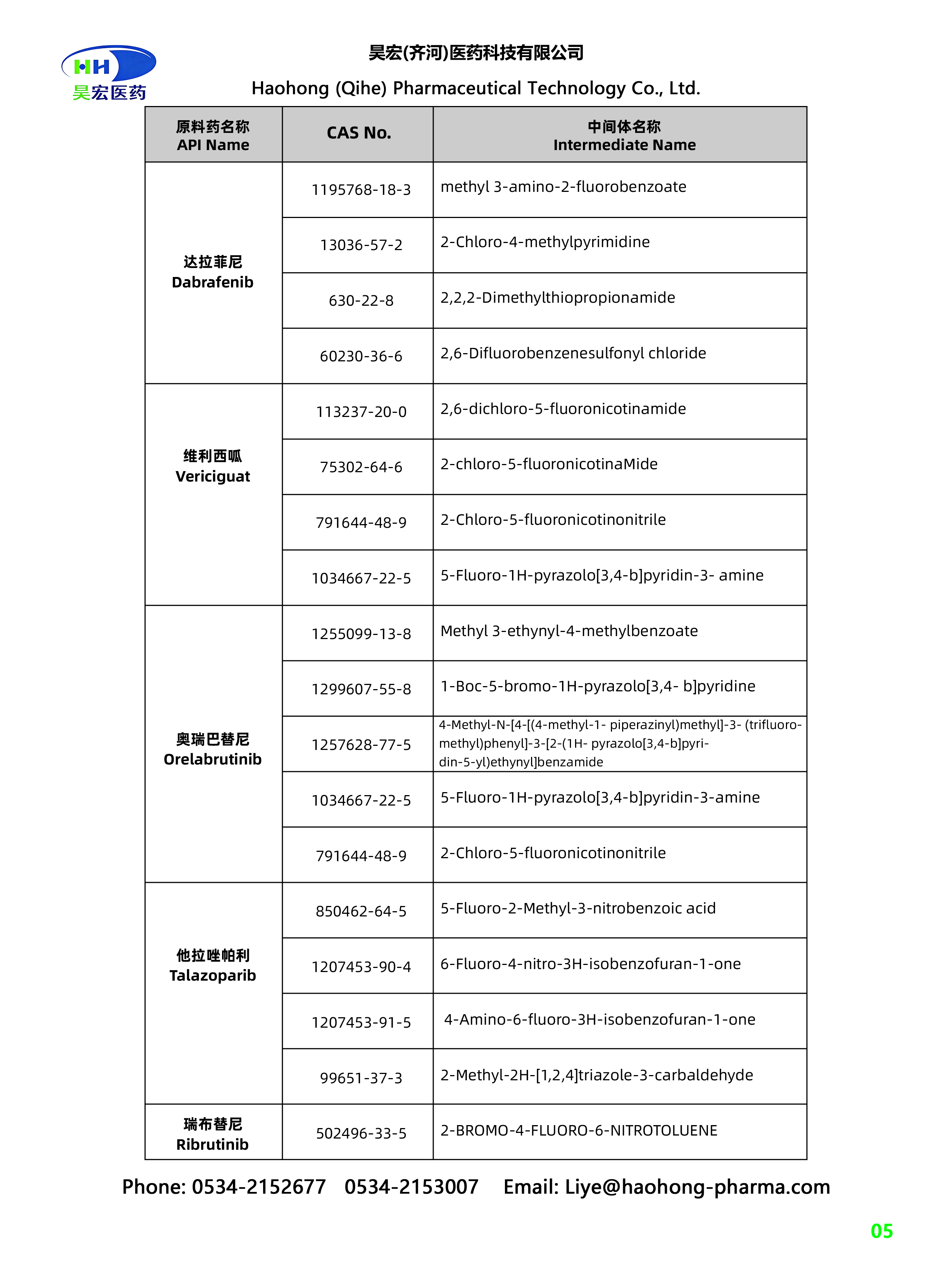
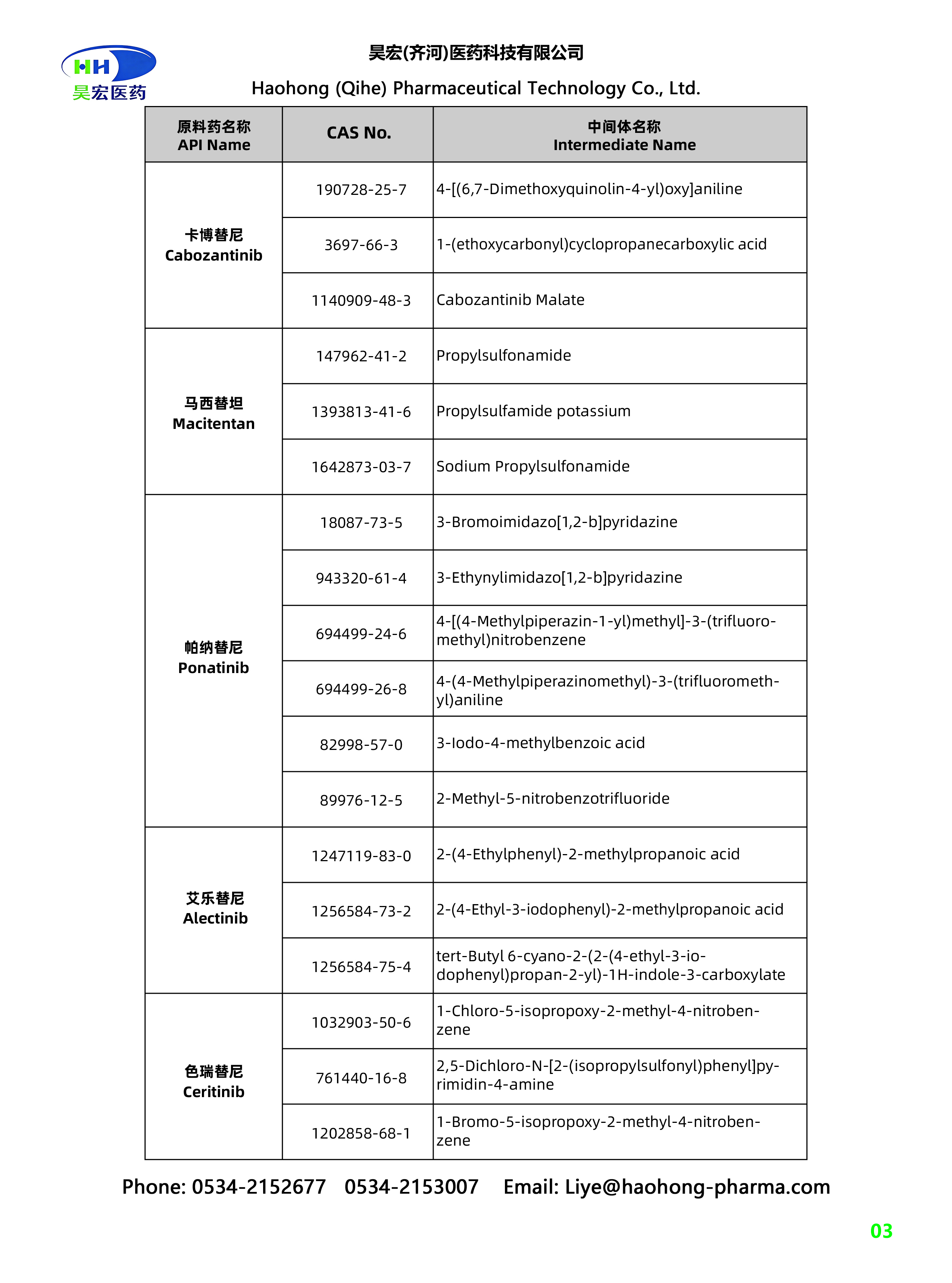
The alectinib line is documented as three compounds: 2-(4-Ethylphenyl)-2-methylpropanoic acid, 2-(4-Ethyl-3-iodophenyl)-2-methylpropanoic acid, and tert-Butyl 6-cyano-2-(2-(4-ethyl-3-iodophenyl)propan-2-yl)-1H-indole-3-carboxylate. The pairing of the first two is informative for a buyer: they differ by a single iodine on the ethylphenyl ring, which documents the iodination step explicitly and lets a project source either the pre-iodination or post-iodination acid. The third compound is the late-stage fragment, in which the indole nitrogen is carried as a tert-butyl carboxylate protecting group and the iodo-ethylphenyl unit is already installed.
Iodine content drives handling requirements. Haohong’s application data specify fully enclosed reaction systems, 316L stainless steel, borosilicate glass and PTFE-lined contact parts, nitrogen protection, low-temperature capability down to −80 °C, and tail-gas absorption with wastewater pretreatment specifically for fluorine-, bromine- and iodine-containing intermediates. For an iodinated aryl building block, that site-level infrastructure is the relevant assurance; the product-level specification still travels with the batch documentation.
Abemaciclib intermediates: five blocks with published specifications
The abemaciclib line is the best-documented of the three, with CAS numbers, molecular formulas, molecular weights, appearance, purity and storage published for each block. The table below reproduces the supplied product data.
| Building block | CAS | Formula / MW | Purity | Documented storage |
|---|---|---|---|---|
| 4-Bromo-2,6-difluoroaniline | 1868-81-7 | C6H4BrF2N / 207.91 | ≥98.0% (HPLC/GC) | Sealed, dry, 2–8 °C, away from light |
| 5-[(4-Ethylpiperazin-1-yl)methyl]pyridin-2-amine | 398565-53-2 | C12H20N4 / 220.03 | ≥98.0% (HPLC) | Sealed, low temperature, light protection |
| 2-Bromo-5-formylpyridine | 100422-52-6 | C6H4BrNO / 185.91 | ≥98.0% (GC/HPLC) | Sealed, dry, refrigerated |
| 4-Fluoro-2-methyl-1-isopropyl-6-(4,4,5,5-tetramethyl-1,3,2-dioxaborolan-2-yl)-1H-benzimidazole | 1356339-86-7 | Not listed in supplied data | ≥98.0% (HPLC) | Sealed, inert gas, 2–8 °C, avoid light |
| 6-Bromo-4-fluoro-1-isopropyl-2-methyl-1H-benzo[d]imidazole | 1356339-85-6 | Not listed in supplied data | ≥98.0% (HPLC) | Sealed, dry, low temperature, light-proof |
What changes for a buyer is the qualification sequence. When identity, purity method and storage are already published, the first technical exchange can start at impurity limits and analytical method transfer instead of at basic characterisation. It also flags a coordination point: the five blocks do not share one storage regime. The boronate ester requires inert gas at 2–8 °C, the formyl pyridine requires refrigeration, and the two benzimidazoles require low-temperature, light-protected handling. A project that orders several blocks together is therefore managing several packaging and cold-chain specifications, not one.
Documented attributes across the three lines
The comparison below uses only attributes present in the supplied product and capability data. A “not published” entry is not a capability statement — it means the corresponding value has to be obtained from the technical package or certificate of analysis rather than read from the catalogue.
| Attribute | Apalutamide line | Alectinib line | Abemaciclib line |
|---|---|---|---|
| Named building blocks | 6 | 3 | 5 |
| CAS and molecular weight published | Not published in supplied data | Not published in supplied data | Published for all five blocks |
| Purity specification published | Not published in supplied data | Not published in supplied data | ≥98.0% (HPLC/GC) per block |
| Storage regime disclosed | Not published in supplied data | Not published in supplied data | Defined per block, including 2–8 °C and inert gas |
| Chain logic visible in the catalogue | Nitro acid → N-methyl amide → aniline → bromo amide, plus pyridine fragment | Parent acid → 3-iodo acid → indole carboxylate | Five structurally distinct fragments rather than one ladder |
Star-rated application fit, pipeline by pipeline
The ratings below are Haohong’s editorial fit assessments, not third-party benchmarks, test results or customer outcomes. They are scored against one consistent rubric using only the supplied product, capability and application data:
- ★★★★★ — the supplied data directly covers this scenario with no material documentation gap.
- ★★★★☆ — strong documented fit; one item, usually product-level specification or handling detail, must be confirmed at the quotation or technical-package stage.
- ★★★☆☆ — plausible fit, conditional on a technical package; the supplied catalogue does not publish product-level data for this line.
- ★★☆☆☆ and below — not supported by the available evidence.
Apalutamide intermediates: fit by scenario
| Project scenario | Fit | Documented basis | Confirm before quoting |
|---|---|---|---|
| Anti-cancer API synthesis | ★★★★★ | Six named blocks span nitro acid, N-methyl amide, aniline and bromo stages of one fluoro-benzamide chain, plus a separate pyridinecarbonitrile fragment | Which stage you buy; per-batch impurity profile; analytical method |
| Targeted drug development | ★★★★☆ | Custom synthesis from gram scale to hundreds of kilograms; ODM scope with structural and process-route customization | Development schedule; method transfer; how the gram-scale spec scales |
| High-purity fine chemical production | ★★★★☆ | Full-batch HPLC/GC and certificate of analysis; heavy-metal, impurity and residual-solvent testing steps; stated purity target of 98%–99% | Purity grade and impurity limits per block, since this line’s product specifications are not published |
| Custom R&D and route work | ★★★★☆ | Customization menu covers structural, purity and specification, process route, capacity and batch, and packaging | Whether the route is fixed by your dossier or open to redesign |
Alectinib intermediates: fit by scenario
| Project scenario | Fit | Documented basis | Confirm before quoting |
|---|---|---|---|
| Anti-cancer API synthesis | ★★★★★ | Two acids differing by a single ring iodine document the iodination step; the protected indole carboxylate gives a late-stage purchase option | Assay per batch; iodine-handling and waste documentation for the route |
| Targeted drug development | ★★★★☆ | Gram-to-hundreds-of-kilograms custom scope; the iodinated aryl unit is the route-defining fragment in early development | Whether you buy the acid or the indole carboxylate; protected-intermediate stability data |
| High-purity fine chemical production | ★★★☆☆ | Site-level capability is documented — enclosed systems, nitrogen protection, tail-gas and wastewater treatment for fluorine, bromine and iodine; product-level CAS and purity are not published for this line | Full technical package and certificate of analysis before the line enters a dossier |
| Custom R&D and route work | ★★★★☆ | Route customization offered; the catalogue’s two-step acid progression shows where a custom route would attach | Feasibility of running the iodination at your target batch size |
Abemaciclib intermediates: fit by scenario
| Project scenario | Fit | Documented basis | Confirm before quoting |
|---|---|---|---|
| Anti-cancer API synthesis | ★★★★☆ | Five blocks with CAS, formula, molecular weight, purity and storage supply several functional roles at once — aniline, piperazinyl pyridine, formyl pyridine, boronate ester and benzimidazole | Multi-block coordination: different storage regimes and packaging per block |
| Targeted drug development | ★★★★★ | Published identity and purity allow specification alignment to start immediately, which shortens the path from sample to qualified supplier | Transfer of your own HPLC/GC methods; tighter limits than the published 98.0% |
| High-purity fine chemical production | ★★★★★ | Appearance, purity ≥98.0%, physical constants and storage are published for each block, alongside heavy-metal, impurity and residual-solvent testing steps | Residual-solvent limits and elemental impurity data by batch |
| Custom R&D and route work | ★★★★☆ | Customization menu applies; the boronate ester and the two benzimidazoles require inert-gas and light-protected handling during any route change | Stability and packaging for the boronate ester in your destination climate |
Matching a line to your project scenario
Anti-cancer API synthesis and scale-up
For a commercial route, the question is where the supplier’s block ends and your chemistry begins. The apalutamide line is the most flexible on this point because it exposes four sequential stages of one chain: a project can start early with the fluoro-nitro acid, take over the reduction itself, or buy the aniline and run only the final coupling. The alectinib line offers a narrower but deeper choice — the parent acid, the 3-iodo acid, or the protected indole carboxylate — and buying the last of these removes both the iodination and the indole protection from your plant. The abemaciclib line is different again: its five blocks are chemically distinct fragments rather than a ladder, so selection is driven by which fragment is hardest for you to make, not by which step you want to outsource.
Targeted drug development and early-phase programmes
In development, the constraint is usually time and documentation rather than tonnage. Two capability facts matter: custom synthesis is offered from gram scale to hundreds of kilograms, and the customization menu covers purity and specification, process route, capacity and batch, and packaging. The practical ranking for an early-phase programme therefore follows documentation depth — the abemaciclib line lets a specification be agreed from published identity and purity data, whereas the apalutamide and alectinib lines require the technical package first. That is a sequencing difference, not a capability difference, and it disappears once the package is in hand.
High-purity fine chemical production
Where the intermediate is judged as a fine chemical in its own right — appearance, assay, residual solvents, elemental impurities, consistent crystal form — the abemaciclib line carries the strongest published evidence, with ≥98.0% purity stated for every block and defined appearance and storage. The site-level quality system supports all three lines: seven control steps covering appearance and property inspection, core chromatographic testing, structural qualitative identification, physical and chemical index testing, heavy-metal and impurity testing, microbiological testing, and factory delivery supporting documents. What varies is how much of that is already visible on paper before the first order.
Custom R&D and route development
Custom work is where the alectinib line is most interesting, because the catalogue itself shows a route decision: the same ethylphenyl propanoic acid appears with and without a ring iodine. A project evaluating an alternative iodination sequence or a different protecting-group strategy has a concrete starting point rather than a blank page. For all three lines, the ODM scope and the stated ability to customize structure, purity, route, batch size and packaging are the relevant capability claims; feasibility, yield and timeline for a specific route are project-specific and confirmed only through a technical discussion and sample work.
How to run the fit assessment: six steps
- Fix the route position first. Decide whether you are buying an early block, a late fragment or a protected intermediate, and record which steps stay in your plant. This single decision changes the specification, the waste-handling burden and the supplier pool.
- Request the technical package for the named compound. For the abemaciclib blocks, published CAS, molecular weight and purity already exist; for apalutamide and alectinib, ask for identity data, assay method and impurity profile explicitly rather than assuming catalogue silence means absence.
- Confirm the storage and transport regime. The documented regimes range from sealed dry 2–8 °C for 4-Bromo-2,6-difluoroaniline to inert gas at 2–8 °C for the boronate ester and refrigeration for 2-Bromo-5-formylpyridine. Match packaging and cold chain to the strictest block in the order.
- Agree the specification and analytical methods. State the purity basis (HPLC or GC), the impurity and residual-solvent limits, and who performs which test. Haohong’s quality control sequence and factory delivery documents define what travels with the batch.
- Run a sample and independent verification. The documented after-sales scope includes sample re-inspection and third-party testing, which allows your own laboratory or an external one to confirm the certificate of analysis before qualification.
- Lock batch size, documents and schedule. MOQ and lead time are handled as tailor-made services per project, so both are agreed in the quotation rather than taken from a catalogue. Confirm batch records, traceability information and delivery documents at the same time.
Documentation, batch stability and delivery in practice
Documentation is where an intermediate supplier is easiest to differentiate and hardest to fake. FDA Q7A expects batch production records for each intermediate and API covering production and control of each batch, expects failing material to be quarantined, and expects distributors and related intermediaries to retain traceability records including the original manufacturer’s identity and the batch numbers supplied. A supplier that cannot produce those records on request creates a downstream problem for your own dossier, not just a filing inconvenience.
Haohong’s supplied quality framework lists seven control steps from appearance and property inspection through chromatographic testing, structural identification, physical and chemical index testing, heavy-metal and impurity testing, microbiological testing, and factory delivery supporting documents. The application data add a stated purity target of 98%–99% with full-batch HPLC/GC and certificate of analysis, vacuum-sealed packaging, low-temperature and light-protected storage and transport, and a production qualification and batch traceability system. The company’s quality management certification is ISO 9001:2015, passed in 2021 — a quality management claim that should not be read as a GMP certificate for a specific intermediate.
On stability and delivery, the supplied case documentation for a top-tier pharmaceutical group project reports outcomes that map directly onto the buyer’s concerns: stable quality across batches, low levels of impurities, heavy metals and residual solvents, simplified downstream synthesis, and stability described over 12–24 months under specified storage conditions. These are company-reported project outcomes, not independent test results, and should be read as claims to verify against your own incoming-material data. The after-sales scope that supports delivery includes full quality inspection documents, technical and process consulting, logistics and customs clearance support, quality dispute compensation and replacement, sample re-inspection, stable supply and production scheduling, and customized R&D iteration.
FAQ
Which documents should accompany an apalutamide, alectinib or abemaciclib intermediate shipment?
Expect a certificate of analysis for the batch, the supporting chromatographic and physical-chemical test data, and factory delivery documents; the supplied quality framework lists appearance and property inspection, core chromatographic testing, structural qualitative identification, physical and chemical index testing, heavy-metal and impurity testing, microbiological testing, and delivery supporting documents as its seven control steps. Batch production records and traceability information belong in the same package, because FDA Q7A expects batch records for each intermediate and API and expects distributors to retain original-manufacturer identity and batch numbers.
Does an oncology intermediate have to be GMP grade?
That depends on the product’s role in the dossier, not on the fact that it is an intermediate. The European Medicines Agency states that active substances used in marketed medicines must comply with GMP and discusses registration obligations for manufacturers and importers of active substances and relevant intermediates described in a regulatory dossier; FDA Q7A addresses intermediates and APIs together. Haohong’s supplied certification is ISO 9001:2015 (2021). Whether a specific compound is treated as a GMP-relevant intermediate in your market is a regulatory classification question to settle with your own dossier owner.
Can all three lines be supplied within one project, and at what scale?
The portfolio lists all three lines as main products, and the manufacturing base is reported as 30 reactors of 3,000–5,000 L with 1,000 tons annual capacity against a stated monthly capacity of 100 MT. Custom synthesis is offered from gram scale to hundreds of kilograms, so a project can start with development quantities and move to commercial batches — provided the specification qualified at small scale is the one transferred to the reactor. The capacity and equipment figures are company-reported and should be verified at audit.
How should a first sample be validated?
Order the sample against a written specification, then compare the certificate of analysis with your own chromatographic result. The documented after-sales scope includes sample re-inspection and third-party testing, which allows independent confirmation before qualification. Pay particular attention to the abemaciclib blocks: published values are ≥98.0% by HPLC or GC, so a project needing tighter limits should raise them before the sample is made, not after.
What drives cost differences between the three lines?
The main drivers visible in the supplied data are route position, halogen handling and storage complexity. Buying a late-stage protected intermediate such as the alectinib indole carboxylate removes steps from your plant but carries more supplier value; fluorine-, bromine- and iodine-containing intermediates require enclosed systems, nitrogen protection and dedicated tail-gas and wastewater treatment; and blocks requiring inert gas or refrigeration — the boronate ester and the formyl pyridine — add packaging and cold-chain cost. MOQ and lead time are quoted as tailor-made services rather than published prices, so a like-for-like comparison needs the same purity basis, batch size and packaging.
How is lead time handled for a new project?
Lead time and MOQ are both handled as tailor-made services, meaning they are agreed per project in the quotation rather than drawn from a catalogue. The after-sales scope includes stable supply and production scheduling support, which is the relevant commitment to discuss for repeat orders. For first orders, ask for the batch schedule alongside the specification so the analytical work and the production slot can be planned together — and if you want to move directly to a quotation or a sample request, contact Xu Tianxia at Xutx@haohong-pharma.com or +86 180-6854-1569 with the compound, route position and target batch size.
Conclusion
Haohong’s three oncology lines are not interchangeable options ranked by strength; they answer different project situations. The apalutamide line gives the widest choice of route position along a single fluoro-benzamide chain, which suits projects that want to keep part of the chemistry in-house. The alectinib line documents an iodination decision in its own catalogue and offers a protected late-stage indole fragment, which suits route-sequencing and development work. The abemaciclib line is the most thoroughly specified, with CAS numbers, ≥98.0% purity and defined storage for all five blocks, which suits programmes that need to agree a specification quickly and defend it in a dossier.
The ratings in this guide should be used as a starting hypothesis, not a conclusion. Two of the three lines require a technical package before their product-level specification can enter a project file, and the star ratings say so explicitly. The next step is therefore concrete: select the route position, request the technical package for the named compound, verify storage and analytical method, and confirm the schedule in writing. Haohong’s company brochure and product documentation are available for download at the Haohong corporate brochure, and the product portfolio is listed at haohong-pharma.com.
Have Questions or Need More Details?
Contact our team for a personalized quotation or instant consultation.
Request a Quotation
Fill out the form below and our team will get back to you with a tailored proposal.
WhatsApp Direct Chat
Prefer to chat in real-time? Message us on WhatsApp for instant assistance & quick answers.
- Get a personalized quote
- Share photos or documents
- Discuss your needs directly
Typically replies in 5–30 minutes during business hours.