
Pharmaceutical Intermediate Specs: A Star-Rated Technical Comparison Guide for Oncology Lines
Direct answer: two suppliers can quote the same CAS number, the same 98% purity headline and the same white powder photograph, and still ship materials that behave completely differently in your route. Specification comparison only works when eight fields are read together: chemical identity, purity with its analytical method, impurity profile, appearance and physical form, storage conditions, batch-to-batch consistency, documentation and traceability, and the supplier's ability to customize a specification for your project. This guide builds that reading framework, then applies it to the oncology intermediates produced by Haohong (Qihe) Pharmaceutical Technology Co., Ltd.
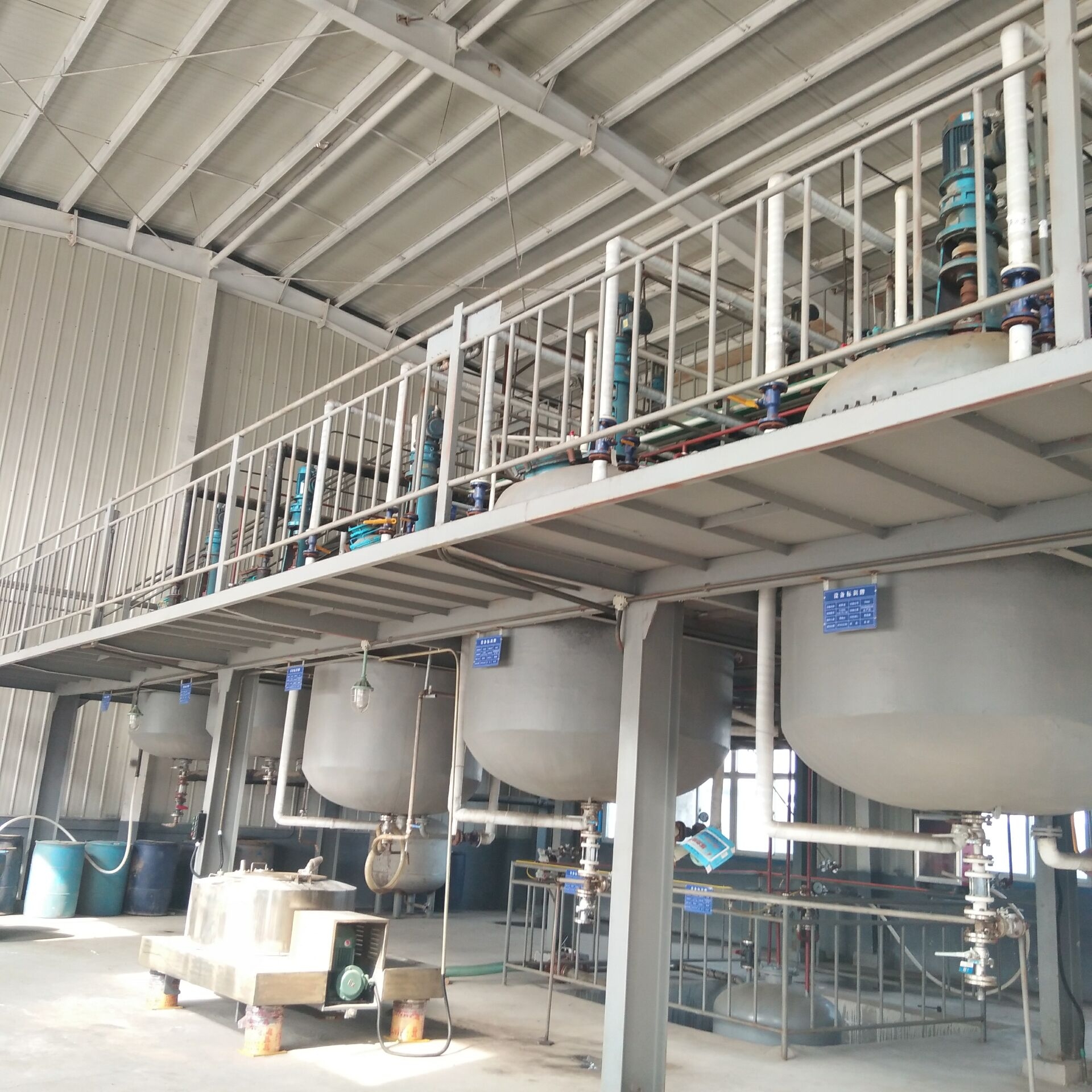
Self-owned reactor capacity is the physical origin of a specification. Reactor control and route design, not the certificate, determine whether an intermediate stays at 98.0% HPLC across batches.
Intermediates are bought in the evaluation-to-execution window: a technical team has already chosen a synthetic route, and the purchasing decision now depends on whether a supplier's material will reproduce the yields and impurity profile that the route development predicted. That decision is made on data, not on claims.
Below is a framework any API or fine chemical buyer can apply to any supplier, followed by a star-rated parameter table for Haohong's Apalutamide, Abemaciclib and Alectinib lines, a step-by-step comparison workflow, and a technical selection checklist for project execution.
1. Problem Definition: A CAS Number Is an Identity, Not a Specification
A CAS number answers one question: which chemical is in the drum. It does not answer whether the material is the correct salt form, whether the purity figure is area-percent or weight-percent, which method produced it, which impurities sit in the remaining percentage, or whether the batch will survive a 2–8 °C transit. Those are specification questions, and they are where oncology projects fail late instead of early.
Five gaps account for most specification disputes in API and fine chemical procurement:
- Isomer and chiral ambiguity. A mono-substituted aromatic intermediate and its regioisomer can share a name family but not a route. Chiral pharmaceutical intermediates need the stereochemical descriptor on the specification sheet, not only on the product page.
- Purity basis without method. A purity number is meaningless without the analytical technique, column, wavelength and integration basis attached to it.
- Undefined impurity profile. Two suppliers at 98.0% HPLC can differ by an order of magnitude in the level of a single critical impurity that inhibits the next step.
- Physical form silence. Appearance, crystal form and particle behaviour affect filtration, drying and dissolution behaviour downstream.
- Storage stated as a footnote. Storage conditions are part of the specification, not logistics. A material specified at 2–8 °C and shipped at ambient has no valid specification.
2. Industry Background: Why Specification Discipline Became a Purchasing Gate
Bulk drug intermediates dominated the global pharmaceutical intermediates market by type in 2025, at 48.10% of revenue according to Mordor Intelligence, while peptide and oligonucleotide intermediates are projected for high growth at a 7.85% CAGR over 2026–2033. Polaris Market Research estimates the global pharmaceutical intermediates market at USD 37.04 billion for 2025. The commercial signal is straightforward: the volume business is still bulk, but the growth is in higher-complexity chemistry, and complexity is expressed through specifications.
The regulatory backdrop reinforces the same conclusion. FDA Q7A guidance requires batch production records to be prepared for each intermediate and API, containing complete information on the production and control of each batch. The same guidance requires intermediates or APIs that fail established specifications to be identified as such and quarantined, and expects distributors and intermediaries to retain traceability records including original manufacturer identity, purchase orders, transport documents, receipt records, product designation and supplied batch numbers. The European Medicines Agency states that active substances used in marketed medicines must comply with GMP, and discusses registration obligations for manufacturers and importers of active substances and relevant intermediates described in regulatory dossiers.
What this means for a buyer is narrower than it sounds. You are not only buying a chemical; you are buying the documentation that lets your own dossier survive review. A specification that cannot be traced to a batch record is a commercial promise, not a technical fact.
Data caveat worth stating openly: there is no transparent, intermediates-specific public dataset for market size, trade value or supplier share. Finished-pharmaceutical datasets such as OECD ATC-based consumption data and IQVIA panel data describe the downstream market, not the intermediate layer. Treat any intermediate market figure, including the ones above, as directional context from commercial research, and build supplier decisions on product-level documents instead.
3. The Six-Field Framework: How to Read Any Intermediate Specification
Read a specification sheet in this fixed order. Each field either confirms or disqualifies the previous one, so the order matters more than the depth of any single field.
- Identity block. Full IUPAC or chemical name, CAS registry number, molecular formula, molecular weight, and salt or stereochemical form. If the formula and molecular weight do not reconcile with the name, stop reading and request a corrected sheet.
- Purity and assay, with method. The number must be paired with the technique, the detection wavelength or detector type, and whether the value is chromatographic area purity or absolute assay. High purity pharmaceutical intermediates should carry both wherever the route is sensitive.
- Impurity profile. Named or numbered impurities, reporting thresholds, and separate statements for heavy metals and residual solvents where the downstream step requires them.
- Appearance and physical properties. Colour, form, and any physical or chemical index the buyer's process depends on.
- Storage and stability. Storage temperature range, light and moisture protection, and the retest or shelf-life basis behind it.
- Documentation and batch traceability. Certificate of analysis per batch, batch numbering convention, delivery supporting documents, and the quality management certification behind the system.
Custom pharmaceutical intermediate synthesis adds a seventh dimension on top of these six: whether the supplier can change the specification itself — structure, purity target, route, batch size, packaging or standard — rather than only supply a fixed catalogue item.
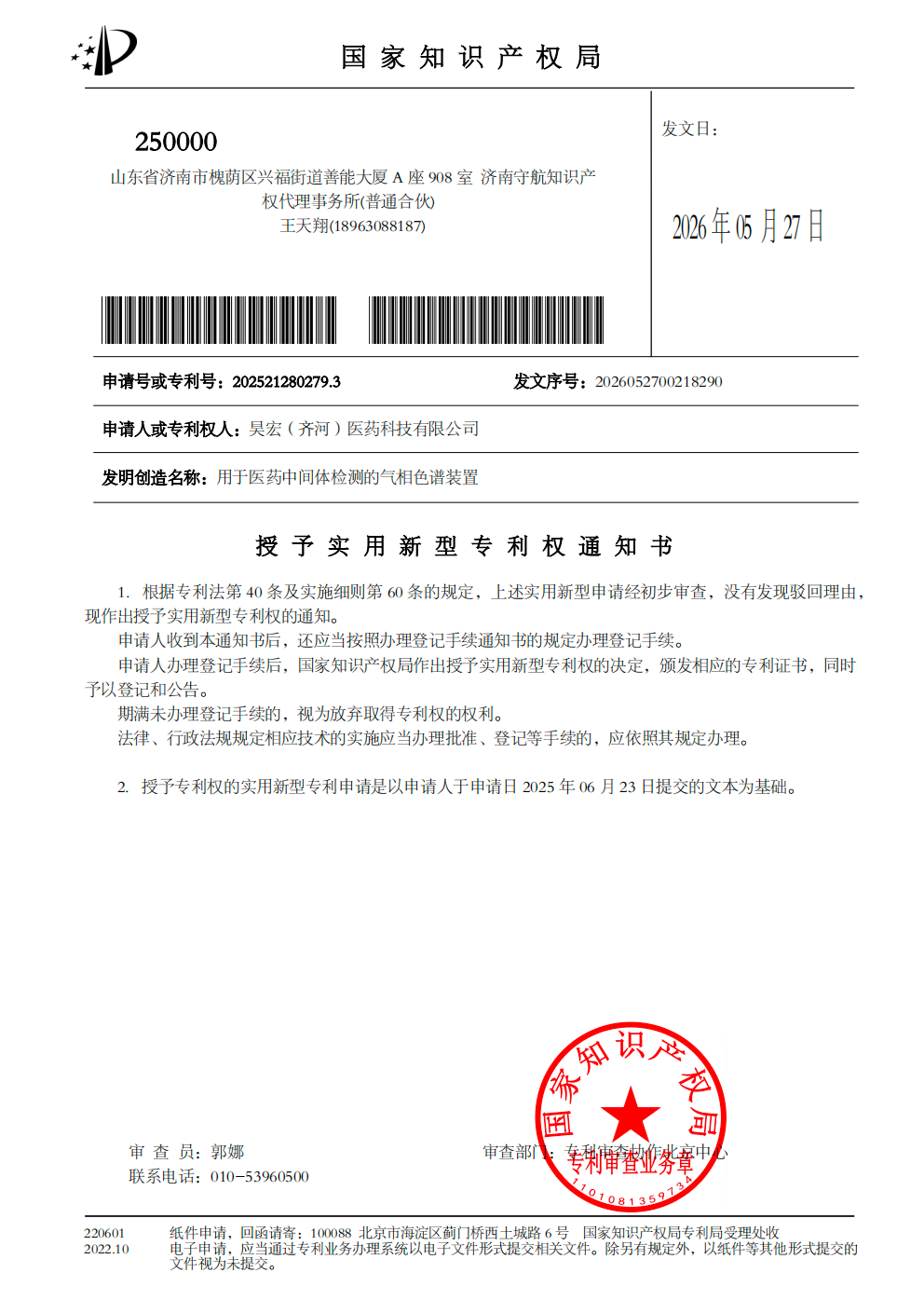
A purity number only becomes a specification when the analytical device and method behind it are fixed. Haohong holds a utility model patent (202521280279.3) for a gas chromatography device used in pharmaceutical intermediate detection.
4. Applying the Framework: Star-Rated Parameters for Haohong's Oncology Intermediates
Haohong (Qihe) Pharmaceutical Technology Co., Ltd. is a Chinese manufacturer of innovative APIs and pharmaceutical intermediates, based in the High-tech Zone of Qihe County, Shandong Province, with a production base in Liaocheng. Its oncology portfolio covers Apalutamide, Abemaciclib and Alectinib intermediates. The table below reads that portfolio through the six-field framework and adds the two dimensions that matter at execution stage: batch consistency and customization.
Star ratings below are this guide's editorial assessment of how completely each field can be verified from a supplier's published documentation and quality structure. They are a procurement comparison aid, not a regulatory grading or a third-party certification.
| Specification field | What a buyer should require | Haohong position on oncology lines | Rating |
|---|---|---|---|
| Chemical identity | Name, CAS, formula and molecular weight reconciled on one sheet | CAS-linked identity entries published across the portfolio, including CAS 403-24-7 and CAS 915087-24-0 on the Apalutamide side, plus CAS 1247119-83-0 and CAS 1256584-75-4 | 5 / 5 |
| Purity by HPLC | Stated value, stated method, stated basis | High purity pharmaceutical intermediates specified at 98.0% or above by HPLC | 5 / 5 |
| Impurity control | Named impurities, thresholds, metals and solvents | Chromatographic testing plus heavy metal and impurity testing sit inside the standard quality control scope | 4 / 5 |
| Appearance and physical form | Colour, form and process-relevant physical indices | Appearance and property inspection is the first gate in the quality control sequence | 4 / 5 |
| Storage and stability | Temperature range, light and moisture protection, retest basis | 2–8 °C storage specified for the oncology intermediates; confirm the exact condition on the product batch certificate | 4 / 5 |
| Batch consistency | Batch records and cross-batch trend data | Haohong reports batch quality stability about 10% above the industry average it benchmarks against, attributed to optimized synthetic routes | 4 / 5 |
| Documentation and traceability | Per-batch CoA, batch numbering, certification behind the system | ISO 9001:2015 certified (certificate NO:174Q240545R0S, Shandong Guojian Certification, valid to 2027-11-25); factory delivery supporting documents issued with each order | 5 / 5 |
| Customization of the spec | Ability to change structure, purity, route, batch size, packaging or standard | Structural, purity and specification, process route, capacity and batch, packaging and standard customization, plus R&D and OEM/ODM services | 5 / 5 |
5. Named Compounds Matter More Than Product Family Names
A portfolio titled Apalutamide, Abemaciclib or Alectinib is a marketing category. A purchase order is placed on a specific compound. When comparing bulk pharmaceutical intermediates supply across suppliers, require the compound-level list and match it line by line.
| Oncology line | Compound-level entries published by Haohong |
|---|---|
| Apalutamide intermediates | 2-Fluoro-4-nitrobenzoic acid; N-Methyl-2-fluoro-4-nitrobenzamide; N-Methyl-2-fluoro-4-aminobenzamide; N-Methyl-2-fluoro-4-bromobenzamide; Methyl 4-bromo-2-fluorobenzoate; 5-Amino-3-(trifluoromethyl)pyridinecarbonitrile |
| Abemaciclib intermediates | 4-Bromo-2,6-difluoroaniline; 5-[(4-Ethylpiperazin-1-yl)methyl]pyridin-2-amine; 2-Bromo-5-formylpyridine; 4-Fluoro-2-methyl-1-isopropyl-6-(4,4,5,5-tetramethyl-1,3,2-dioxaborolan-2-yl)-1H-benzimidazole; 6-Bromo-4-fluoro-1-isopropyl-2-methyl-1H-benzo[d]imidazole |
| Alectinib intermediates | 2-(4-Ethylphenyl)-2-methylpropanoic acid; 2-(4-Ethyl-3-iodophenyl)-2-methylpropanoic acid; tert-Butyl 6-cyano-2-(2-(4-ethyl-3-iodophenyl)propan-2-yl)-1H-indole-3-carboxylate |
This list is the correct starting point for an RFQ. Ask for the certificate of analysis on the exact compound, not on the closest catalogue neighbour, and confirm that the CAS on the certificate matches the CAS in your route documentation.
6. What a 0.02 Percentage Point Purity Difference Actually Buys You
Small purity numbers look cosmetic on paper and behave nothing like cosmetics in a reactor. A purity gap of 0.02 percentage points between two suppliers is not a marketing margin; it represents a different residual impurity load entering your next synthetic step, and it compounds. If that impurity is carried through two further steps without purge, the downstream isolation, filtration time and crystallization yield all shift.
Haohong attributes a purity value 0.02 percentage points above its reference benchmark to optimized synthetic routes rather than to post-treatment alone. The distinction is worth understanding at evaluation stage: purification at the back end removes impurities that the route already made, while route optimization prevents part of them from forming. The second approach is what makes a specification reproducible batch after batch, and it is also why process route customization is a genuine capability rather than a service label.
For the buyer, the practical test is not whether the number is higher. It is whether the supplier can explain the gap. Ask which impurity the route optimization suppresses, at which step, and how the certificate of analysis reports it. A supplier who can answer has control of the process; a supplier who cannot is quoting a result.
7. Where the Specification Comes From: Self-Owned Capacity and Route Control
A specification is an output of equipment and process control. Haohong operates a production base in Liaocheng equipped with 30 sets of 3,000–5,000 L reactors and an annual production capacity of 1,000 tons, with monthly production capacity stated at 100 MT. The company reports 75 employees, including a 30-engineer R&D team, at a 3,000 m² site.
Equipment ownership is the part that matters for specification comparison. A trading intermediary can forward a certificate; only the party holding the reactors can change a route parameter and re-validate the batch. Haohong's process-side evidence includes four utility model patents granted by the China National Intellectual Property Administration for production equipment for pharmaceutical intermediates, covering a gas chromatography detection device (202521280279.3), a waste gas absorption device (202521268255.6), a powder refining and mixing equipment for pharmaceutical raw materials (202520639784.6), and a production equipment patent (202521269185.6).
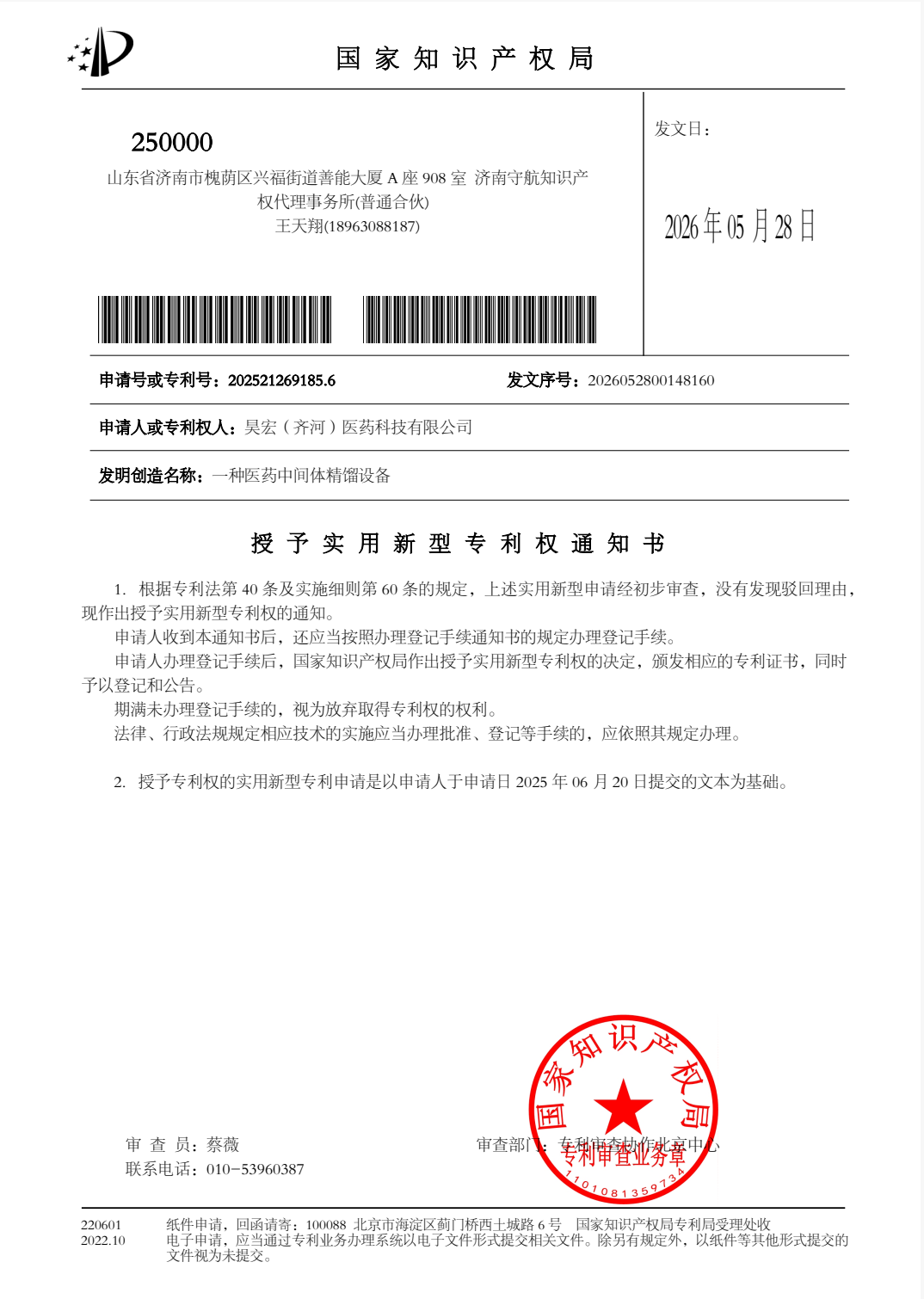
Utility model patent 202521269185.6, granted 2026-05-28 and valid to 2035-05-28, covers production equipment for pharmaceutical intermediates.
Quality control at the site follows a fixed sequence: appearance and property inspection, core chromatographic testing, structural qualitative identification, physical and chemical index testing, heavy metal and impurity testing, microbiological testing, and the issue of factory delivery supporting documents. That sequence maps directly onto fields two to six of the framework above, which is why the documentation package can be used as specification evidence rather than as a compliance formality.
Certification sits at system level rather than product level. Haohong holds ISO 9001:2015 certification, certificate NO:174Q240545R0S, issued 2024-11-26 by Shandong Guojian Certification Co., Ltd. against GB/T19001-2016 (ISO 9001:2015), valid to 2027-11-25. ISO 9001 confirms a managed quality system; it is not a GMP certificate for a specific product, and buyers in regulated markets should pair it with batch-level documentation, which is consistent with the Q7A expectations described earlier.
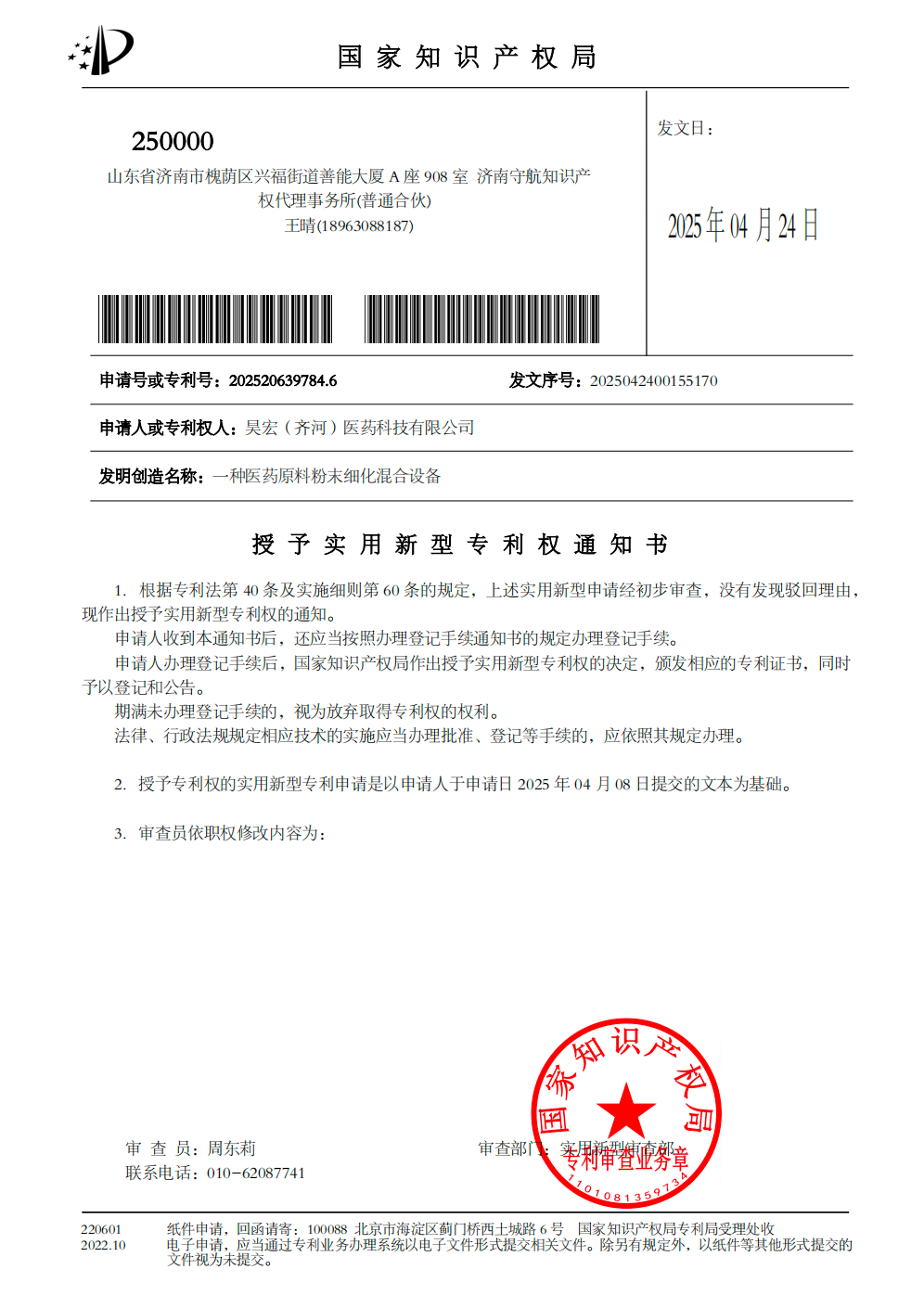
Physical handling equipment affects the appearance, particle behaviour and uniformity fields that buyers often leave out of a specification comparison.
8. Step-by-Step: Building a Comparable Specification Sheet
The workflow below converts two unequal specification documents into one comparable table. It takes roughly one working week and prevents months of downstream rework.
- Lock the compound, not the category. Write the exact chemical name and CAS into the RFQ. For Haohong's oncology lines, use the compound-level lists in section 5 as the reference.
- Demand the analytical method next to the number. Purity without method is unusable. Require HPLC figures to state detector, wavelength and integration basis, and ask whether chromatographic area purity and absolute assay are both reported.
- Request the impurity section separately. Ask for named or numbered impurities, reporting thresholds, heavy metal limits and residual solvent statements. Compare the number of controlled impurities, not the headline purity.
- Confirm physical form and appearance criteria. Colour and form must be acceptance criteria, not observations. Include the physical and chemical index tests your process depends on.
- Fix the storage condition in the contract. If the product is specified at 2–8 °C, the condition applies to transit, warehouse and use. Storage is a specification field and belongs in the quality agreement.
- Ask for cross-batch data, not one certificate. Three to five consecutive batches show whether the process or the analyst produced the result.
- Map documents to your dossier. Confirm batch numbering, delivery supporting documents and traceability records meet the expectations of your target market before commercial terms are negotiated.
- Validate by sample before scaling. Set the acceptance criterion as a pre-shipment test and reserve the right to third-party verification on any disputed batch.
9. Use Cases: Matching the Spec Set to the Project Stage
Oncology drug intermediates at route development stage. When the route is still moving, the specification that matters is the impurity profile, not the headline purity. A supplier able to adjust route and purity targets in the same conversation removes a full iteration from development. Haohong's customization scope covers structural, purity and specification, process route, capacity and batch, packaging and standard adjustments.
Active pharmaceutical intermediate supply at scale-up. Once the route is fixed, batch consistency becomes the controlling variable. The company reports that a project synthesized and processed into final finished medicines achieved high reaction yield, low levels of impurities, stable quality across batches, simplified downstream processes and accelerated drug registration.
Custom pharmaceutical intermediate synthesis from gram to hundreds of kilograms. For projects where no catalogue item exists, or where the required specification differs from the standard grade, ODM and R&D customization is the relevant capability. Haohong provides custom synthesis from gram scale to hundreds of kilograms, with minimum order quantity and lead time set as tailor-made services.
Chiral, peptide and other higher-complexity classes. Where the specification must carry stereochemistry or a defined peptide sequence, the identity block becomes the decisive field. Confirm the stereochemical descriptor, the salt form and the analytical method used to prove chiral purity before comparing price.
10. Comparison Table: What Each Document Actually Proves
| Document | What it proves | What it does not prove |
|---|---|---|
| Product catalogue entry | The compound is offered and identified by name or CAS | Purity, batch performance, availability or regulatory status |
| Certificate of analysis (one batch) | The tested batch met the stated specification | That the next batch will |
| Multi-batch data set | The process, not the analyst, controls the specification | Stability over the full shelf life without storage data |
| ISO 9001:2015 certificate | A certified quality management system is in place (Haohong: NO:174Q240545R0S, valid to 2027-11-25) | GMP compliance for a specific product or market |
| Equipment and process patents | Production and analytical equipment is company-developed and documented | Product-level purity or capacity utilization |
| Sample test result | The material behaves as required in your own route | Commercial-scale equivalence without process confirmation |
11. FAQ
Is Haohong's quality management system certified, and what does the certificate actually cover?
Yes. Haohong (Qihe) Pharmaceutical Technology Co., Ltd. holds ISO 9001:2015 certification, certificate NO:174Q240545R0S, issued on 2024-11-26 by Shandong Guojian Certification Co., Ltd. against GB/T19001-2016 (ISO 9001:2015), with validity until 2027-11-25. The certified scope covers medical research and experimental development; technical services, technical development, technical consulting, technical exchange, technology transfer and technology promotion; sales of chemical products excluding licensed chemical products; and production. The certificate confirms a managed quality system, not product-specific GMP approval, so regulated-market buyers should still request batch production records, nonconformance handling and traceability documentation for the exact product.
Can Haohong change a specification, or only supply a fixed catalogue grade?
Customization is offered across seven dimensions: structural customization, purity and specification customization, process route customization, capacity and batch customization, packaging and standard customization, and R&D and OEM/ODM customization. On the quality side, the control scope includes appearance and property inspection, core chromatographic testing, structural qualitative identification, physical and chemical index testing, heavy metal and impurity testing, microbiological testing, and factory delivery supporting documents. In practical terms, a buyer can request a different purity target, a different batch size or a different packaging format rather than accepting a single standard grade.
How is budget structured when there is no published price list?
Minimum order quantity is a tailor-made service, which means the commercial quantity is agreed per project rather than fixed by a catalogue. Delivery terms cover the full range of international trade arrangements, including EXW, FOB, CFR, CIF, air freight and international express, as well as DDP/DDU door-to-door services. Payment terms are 50/50, and the acceptance criterion is a pre-shipment test. Because MOQ is project-specific, budget should be requested against a defined compound, purity specification and annual or campaign volume rather than against a generic product family.
Can buyers verify a batch before committing to a full order?
Verification is built into both ends of the order. Before shipment, the acceptance criterion is a pre-shipment test, so the batch is tested against the agreed specification before it leaves. After delivery, the after-sales scope includes full support of quality inspection documents, sample re-inspection and third-party testing, quality dispute compensation and replacement, and technical and process consulting support. For a first order, the practical sequence is to request the certificate of analysis on the exact CAS, confirm the analytical method, then validate with a sample against your own route before scaling.
What lead time should a buyer plan for, and what capacity sits behind it?
Typical production lead time is a tailor-made service and is agreed with the order, so it is driven by route complexity and batch size rather than by a fixed catalogue schedule. Behind that flexibility is a production base in Liaocheng with 30 sets of 3,000–5,000 L reactors, an annual production capacity of 1,000 tons and monthly production capacity stated at 100 MT. For planning purposes, treat tailor-made lead time as a project variable and fix it in writing at the quotation stage — and if the project is time-critical, request the current production schedule together with the specification package. The full technical and capability overview is available in the Haohong corporate brochure, and specification requests can be sent to Xutx@haohong-pharma.com or +86 180-6854-1569.
12. Technical Selection Checklist
Use this checklist as the last gate before an intermediate moves from evaluation to execution.
- Exact chemical name and CAS confirmed in writing, with formula and molecular weight reconciled.
- Purity stated with method, detector and basis; HPLC at 98.0% or above confirmed for high purity grades.
- Impurity profile, heavy metals and residual solvents reported with thresholds.
- Appearance and physical index criteria defined as acceptance criteria.
- Storage condition fixed in the quality agreement — 2–8 °C where the product specifies it — and applied to transit.
- Three to five consecutive batch certificates reviewed for consistency.
- ISO 9001:2015 certificate verified by number and validity, and batch-level documentation mapped to the target market.
- Customization scope confirmed where the standard grade does not fit.
- MOQ, delivery term, payment split and pre-shipment acceptance criterion agreed before the purchase order.
- Sample validated in your own route, with third-party testing reserved as a dispute mechanism.
The framework is deliberately unglamorous: read the identity, read the method, read the impurity profile, read the batch trend. Suppliers that can answer those four questions with documents are the ones whose specification will hold at commercial scale. Haohong (Qihe) Pharmaceutical Technology Co., Ltd. publishes its oncology intermediate portfolio, certification and capability scope at www.haohong-pharma.com, including the Alectinib intermediate product entry for compound-level reference.
Request a specification package or a sample
Send the compound name, CAS and target purity, and Haohong will return the certificate of analysis, the analytical method and the customization options for your project.
Email: Xutx@haohong-pharma.com | Tel / WhatsApp: +86 180-6854-1569 | Download the corporate brochure

Haohong (Qihe) Pharmaceutical Technology Co., Ltd., High-tech Zone, Qihe County, De Zhou City, Shandong Province, China.
Have Questions or Need More Details?
Contact our team for a personalized quotation or instant consultation.
Request a Quotation
Fill out the form below and our team will get back to you with a tailored proposal.
WhatsApp Direct Chat
Prefer to chat in real-time? Message us on WhatsApp for instant assistance & quick answers.
- Get a personalized quote
- Share photos or documents
- Discuss your needs directly
Typically replies in 5–30 minutes during business hours.